What Surgeons Should Consider When Selecting a Tissue Repair Graft
3 hours ago 16

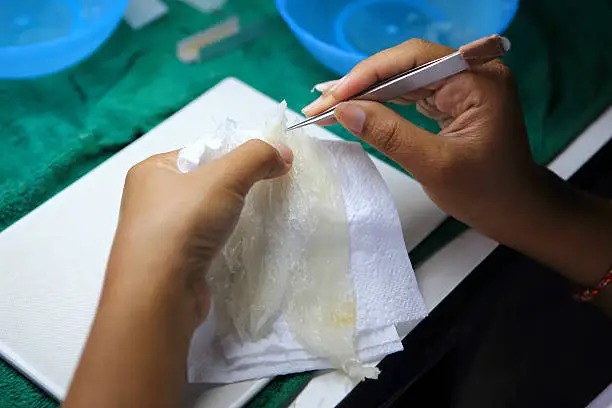
Tissue repair graft selection is an important decision in many surgical procedures. When soft tissue needs reinforcement, the product selected should align with the patient’s anatomy, the surgical site, the condition of the tissue, and the goals of the procedure. A tissue repair graft is not chosen based on one feature alone. Surgeons may evaluate composition, handling, hydration, strength, remodeling potential, size availability, contraindications, and how well the graft fits into the overall surgical workflow.
Sanara MedTech develops and commercializes advanced products for surgical, wound care, and tissue repair markets. Its surgical portfolio includes products such as CellerateRX® Surgical Powder, BIASURGE® Advanced Surgical Solution, FORTIFY FLOWABLE® Extracellular Matrix, FORTIFY TRG® Tissue Repair Graft, TEXAGEN® Amniotic Membrane Allograft, ACTIGEN™ Verified Inductive Bone Matrix, and ALLOCYTE® Plus Advanced Viable Bone Matrix.
FORTIFY TRG® Tissue Repair Graft is Sanara MedTech’s tissue repair graft designed for implantation to reinforce soft tissue. It is a dried, multi-layered small intestinal submucosa, or SIS, extracellular matrix sheet derived from a porcine source.
A tissue repair graft is used to support soft tissue reinforcement during surgery. The graft does not replace proper surgical technique, tissue preparation, fixation, infection prevention, or postoperative care. Instead, it provides a material that may help reinforce tissue where the surgeon determines additional support is needed.
Surgeons may consider a tissue repair graft when soft tissue quality, defect size, anatomical location, or procedural goals require more support than primary tissue repair alone can provide. The final decision should always depend on the patient, the procedure, the condition of the tissue, and the surgeon’s professional judgment.
One of the first considerations is the source and structure of the graft material.
Tissue repair grafts may be made from different biologic or synthetic materials. Each material category may have different handling characteristics, remodeling behavior, strength profile, and patient considerations.
FORTIFY TRG® Tissue Repair Graft is made from 100% porcine small intestinal submucosa extracellular matrix and is intended for implantation to reinforce soft tissue.
This matters because SIS extracellular matrix is designed to provide a biologic scaffold. A scaffold can support tissue interaction as part of the body’s repair process, but it should not be viewed as a guarantee of a specific outcome. Patient health, blood supply, tissue quality, surgical technique, and postoperative conditions all influence healing.
When surgeons evaluate a biologic graft, they may consider how the material interacts with the body over time.
Sanara MedTech describes FORTIFY TRG® as an SIS scaffold that remodels as part of tissue repair. Sanara’s product information notes that preclinical data showed long-term strength as SIS remodeled and that the graft and tissue formed a vascularized structure resembling natural tissue architecture.
The word “preclinical” is important. Preclinical information can help explain how a product is designed to function, but it should not be interpreted as a guaranteed clinical result for every patient or every procedure. Surgeons should evaluate product data, current labeling, clinical needs, facility protocols, and their own experience before selecting a graft.
No two surgical sites are exactly the same. A tissue repair graft should be adaptable enough to match the patient’s anatomy and the dimensions of the repair.
FORTIFY TRG® is supplied in multiple sizes and can be cut to size to accommodate the patient’s anatomy.
This can be useful when the surgical site requires a specific shape or coverage area. The Instructions for Use also state that after hydration, the graft should be trimmed to fit the implant site with a small allowance for overlap.
Sizing is more than convenience. A graft that is too small may not provide the desired coverage, while excessive material may be difficult to position or secure properly. Surgeons should consider the defect, surrounding tissue, fixation method, and amount of overlap needed for the repair.
Handling characteristics can affect how efficiently a graft is prepared and placed during a procedure.
FORTIFY TRG® must be hydrated before use. The Instructions for Use identify hydration options that include room-temperature sterile saline, sterile lactated Ringer’s solution, or autologous body fluids such as blood, bone marrow aspirate, or blood concentrates.
The IFU also states that the graft should be hydrated until the desired handling characteristics are achieved and should not be hydrated for longer than five minutes.
Surgeons and operating room teams should understand:
A clear preparation process helps support consistency and reduces confusion during the procedure.
A tissue repair graft must be secured appropriately for the procedure.
The FORTIFY TRG® Instructions for Use state that, after hydration, the graft should be sutured or stapled into place while avoiding excess tension. The IFU also notes that close tissue approximation produces better outcomes when suturing or stapling the graft.
This highlights an important principle: the graft is only one part of the repair. How the graft is positioned, secured, and integrated into the surrounding tissue can affect the surgical result.
Surgeons should evaluate:
Patient selection is critical when choosing any biologic graft.
Because FORTIFY TRG® is derived from a porcine source, it should not be used in patients with known sensitivity to porcine materials.
Surgeons should also consider broader patient factors, including:
The FORTIFY TRG® IFU notes that patients undergoing radiation therapy may not experience normal wound healing.
These considerations reinforce the importance of matching the graft to the patient’s individual condition rather than using the same approach for every procedure.
A graft should be selected for the specific demands of the repair.
The FORTIFY TRG® IFU states that the graft may not have sufficient strength to support stresses encountered in some ventral hernias or large-area body-wall repairs.
This type of limitation is important. A product may be appropriate for one soft tissue reinforcement application but not ideal for another. Surgeons should review whether the graft’s size, strength, and intended use match the expected mechanical demands of the procedure.
Sterility, handling, and single-use requirements must also be reviewed.
FORTIFY TRG® is provided sterile for single use only. The IFU states that attempts to reprocess, resterilize, or reuse the graft may lead to device failure or disease transmission.
The product should not be used if the package seal is broken, the package is damaged, the graft has been mishandled, or the graft is past its expiration date.
Operating room teams should have a clear process for product inspection, sterile handling, preparation, documentation, and disposal of unused portions.
Complications can occur with any surgical graft material. The FORTIFY TRG® IFU identifies potential complications that may include infection, inflammation, allergic reaction, bleeding, migration, delayed or failed incorporation, pain, erosion, seroma formation, recurrence of tissue defect, and other adverse events.
Reviewing potential complications helps surgeons evaluate whether the graft is appropriate for the patient and procedure. It also helps guide patient counseling, postoperative monitoring, and clinical documentation.
Choosing a tissue repair graft is not a standalone decision. It should be part of a complete surgical plan that considers the patient’s condition, surgical objective, tissue quality, repair technique, and postoperative needs.
FORTIFY TRG® Tissue Repair Graft offers surgeons a 100% porcine SIS ECM option intended for soft tissue reinforcement. It is supplied sterile, can be hydrated before use, may be cut to accommodate patient anatomy, and is designed to function as a biologic scaffold in soft tissue repair.
The final decision should always be based on current Instructions for Use, product labeling, institutional protocols, available evidence, and the surgeon’s well-informed medical judgment.
Sanara MedTech provides advanced products for surgical, wound care, and tissue repair markets. Through technologies such as FORTIFY TRG® Tissue Repair Graft, Sanara MedTech supports healthcare professionals with products designed for use in modern surgical care.
Comments (0)