Ear Vagus Nerve Stimulation for Beginners: What to Know Before Your First Session
1 day ago 47

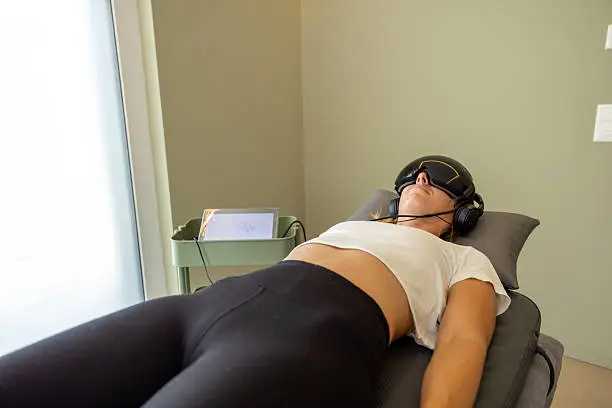
A first session with an ear vagus nerve stimulator is mainly a question of technique. Where should the electrode sit? What should the stimulation feel like? How should intensity be adjusted? Does a stronger sensation indicate more effective stimulation?
These questions matter because transcutaneous auricular vagus nerve stimulation, or taVNS, is not simply electrical stimulation applied anywhere around the ear. The external ear has mixed sensory innervation. taVNS is designed around selected auricular regions associated with the auricular branch of the vagus nerve, which means electrode position, contact quality and stimulation parameters are fundamental parts of the method.
For beginners, the objective of the first session is straightforward: establish correct placement, stable contact, comfortable stimulation and a protocol that can be repeated consistently.
taVNS delivers electrical stimulation through the skin of the external ear. The intended neural target is the auricular branch of the vagus nerve, often abbreviated ABVN. This branch is of particular interest for non-invasive neuromodulation because portions of its cutaneous receptive field can be accessed without surgery.
Anatomical and methodological research has examined several auricular targets, including regions of the concha and tragus. The distribution is more complex than simplified diagrams sometimes suggest, which is one reason researchers emphasize accurate electrode placement.
A sensation somewhere on the ear is therefore not sufficient to establish that an intended vagal pathway is being engaged. The location of stimulation matters.
Poor electrode contact can change both current delivery and the way stimulation feels. If only a small section of an electrode touches the skin, current density can become concentrated at that point. The result may be a sharper sensation even when the device is operating at a relatively modest intensity.
Before increasing stimulation, check whether the electrode is positioned according to the device instructions, whether the intended contact surfaces are touching evenly, whether the earpiece has shifted, whether the device requires moisture or conductive gel, and whether skin products are interfering with contact.
Different earpiece designs should not be positioned in the same way. A tragus clip and a concha-shaped electrode system use different anatomical targets and contact geometry.
One of the most important lessons from taVNS research is that protocols vary. International consensus recommendations identify stimulation location, electrode design, frequency, pulse width, current intensity, duty cycle and session duration as important variables that should be documented clearly.
For a first-time user, this has a simple practical implication: do not construct a personal protocol by combining instructions from unrelated sources. A session length taken from one study, an intensity recommendation from another device and an electrode position copied from a video do not necessarily create a valid taVNS protocol.
Purpose-built ear-based vagus nerve stimulation devices are designed around specific electrode configurations, stimulation settings and operating instructions. Those product-specific instructions should remain the primary reference for use.
|
Before starting |
Why it matters |
|
Confirm electrode location |
Auricular innervation is region-specific |
|
Confirm contact method |
Poor contact can change current sensation |
|
Check recommended session length |
taVNS protocols vary substantially |
|
Review intensity instructions |
Maximum tolerable intensity is not the objective |
|
Read contraindications |
Safety guidance is device-specific |
|
Know expected sensations |
Helps distinguish normal stimulation from discomfort |
Newer consumer neurotechnology often adds software to the stimulation device. For a beginner, the most useful software functions are practical: onboarding, session history, reminders, wellness check-ins and analytics that make repeated use easier to understand.
A good app + analytics layer can reduce setup errors and show whether sessions are being used consistently. AI personalization can go a step further by using goals, check-ins or historical patterns to recommend a routine. These functions are different from the electrical stimulation protocol itself.
The same distinction applies to real-time HRV and closed-loop stimulation. Real-time HRV refers to live or near-live heart-rate-variability information. Closed-loop stimulation is a stricter term: the device changes stimulation parameters automatically in response to physiological feedback. A system can offer HRV references, AI personalization or app analytics without being closed loop.
ZenoWell Luna Plus illustrates this separation. Its connected experience includes AI Coach, session history, app analytics, sleep information and on-demand HR and HRV references. These data can support guidance and routine selection, but the system does not currently use those signals to automatically modify frequency, pulse width, waveform, duty cycle or intensity during the active session. Beginners should not confuse a smarter software layer with a different electrical dosing protocol.
For beginners, this is also a useful way to evaluate research-backed technology. The strongest evidence is not the longest reference list; it is the evidence that matches the stimulation site, electrode design, parameters and intended use of the device. Software can improve adherence and interpretation, but it cannot make a poorly matched electrical protocol more valid. When a company cites a taVNS study, check whether the study used a comparable auricular target and stimulation schedule before assuming the result applies to the product in hand.
|
Digital feature |
Useful role for a beginner |
What it does not replace |
|
Real-time HRV |
Adds physiological context when measured reliably |
Correct electrode placement and protocol |
|
AI personalization |
Can suggest a routine using goals and history |
Product-specific safety instructions |
|
Good app + analytics |
Can organize sessions and adherence |
Evidence that the stimulation itself is effective |
|
Closed-loop stimulation |
Would automatically adjust parameters from feedback |
A static protocol plus data display |
Electrical stimulation is perceived differently from person to person. Ear anatomy, skin sensitivity, electrode area and stimulation parameters all influence sensation. Typical descriptions include mild tingling, rhythmic pulsing, buzzing or a subtle vibrating sensation.
The stimulation should generally remain comfortable. A stronger sensation is not a reliable measure of greater vagal engagement. Current amplitude is only one element of the protocol. Frequency, pulse width, waveform, electrode location and contact area also affect the way stimulation is delivered.
If the sensation becomes sharp or painful, checking electrode contact and positioning is usually more appropriate than simply increasing or tolerating the intensity. Pain should not be used as a target.
Skin-electrode impedance varies with pressure, moisture, contact area and the condition of the skin. This is why the same displayed stimulation level can feel different from one session to another.
A poorly seated electrode may produce a strong focal sensation. A stable, evenly distributed contact may feel less sharp even at the same nominal setting. Depending on the device, improving contact may involve repositioning the earpiece, cleaning the contact surface or using the conductive medium specified by the manufacturer.
Do not assume every system requires gel. The contact method should match the electrode design.
There is no universal taVNS session duration. Published protocols vary considerably, and consensus papers have highlighted this variability as a methodological issue.
For a consumer user, the appropriate session length is therefore the one defined for the specific product. The first session should establish whether the earpiece fits correctly, contact remains stable, the sensation is comfortable, the controls are understood and the skin responds normally after use.
A mild session is not a reason to extend the duration beyond the recommended schedule. Consistency with a defined protocol is more informative than making several changes during the first use.
Electrical stimulation is sometimes approached as though it were exercise: if some is useful, more must be better. That assumption does not follow from taVNS research.
Increasing current may increase stimulation of local sensory fibers as well as the intended region. It may also reduce tolerability without improving target engagement. A practical target is usually a clearly perceptible but comfortable level within the device’s operating guidance.
If sensation changes abruptly during a session, first check whether the earpiece has moved or contact has changed. If one contact point becomes painful, correcting placement and lowering intensity is more appropriate than trying to push through.
Both taVNS and transcutaneous electrical nerve stimulation use current delivered through the skin. That does not make the two methods equivalent. General-purpose TENS systems are primarily designed for peripheral sensory stimulation in pain-related applications.
taVNS is defined more specifically by its auricular target, electrode configuration and stimulation protocol. Laboratory guidance for taVNS emphasizes controlled electrode position, current, pulse width, frequency and timing for precisely this reason.
Adding an ear clip to a general-purpose electrical stimulator does not establish that the resulting setup reproduces a studied taVNS protocol. Beginners should avoid copying settings from unrelated devices or improvising stimulation around the ear or neck.
Once the first session feels comfortable, changing several variables at once can make the experience harder to interpret. If product instructions allow, keep the first several sessions reasonably consistent in electrode placement, stimulation level, session duration and time of day.
This does not mean every session must be identical. It means establishing a reproducible baseline before experimenting.
A first-time user who wants a more detailed walkthrough can refer to this ear vagus nerve stimulator guide for first-time users, which covers placement, contact, intensity and routine considerations in more detail.
The largest safety review of taVNS published in 2022 evaluated 177 studies involving 6,322 participants. The authors found the method generally safe and feasible under the protocols studied and found no causal relationship between taVNS and reported serious adverse events. The review also noted that adverse-event reporting was incomplete or inconsistent in a substantial proportion of studies.
That last point matters. Research safety data describe controlled protocols. They do not automatically validate every commercial product, stimulation setting or improvised setup.
Users should follow the contraindications and warnings supplied with their specific device. People with implanted electrical medical devices or relevant medical conditions should seek appropriate professional guidance before using electrical neuromodulation. Significant pain, faintness, chest discomfort, severe dizziness, breathing difficulty or another concerning symptom is a reason to stop use and follow the device’s safety guidance.
|
What happens |
More appropriate first response |
|
Stimulation feels unexpectedly weak |
Check placement and electrode contact |
|
Sensation is sharp at one point |
Reposition the electrode and inspect contact area |
|
Another user tolerates a much higher setting |
Do not copy another person’s intensity |
|
The first session feels mild |
Do not automatically increase duration |
|
Earpiece shifts during use |
Correct fit before changing stimulation |
|
Irritation persists after use |
Stop and review device-specific guidance |
Starting ear vagus nerve stimulation does not require detailed expertise in neurophysiology, but correct use depends on more than producing a sensation in the ear. Placement, contact quality, stimulation parameters, comfort and consistency are all part of the method.
Research into taVNS continues to develop, while protocols remain heterogeneous across studies. That makes product-specific instructions particularly important for beginners. Research-backed technology is valuable only when users understand which parts of the evidence apply to the actual device and protocol they are using.
The first session should not answer the question, “How much stimulation can I tolerate?” It should establish whether the device can be used correctly, comfortably and consistently.
Comments (0)