Non-Invasive Body Contouring: How HIFU Works, Benefits, Results & What to Expect
13 days ago 138

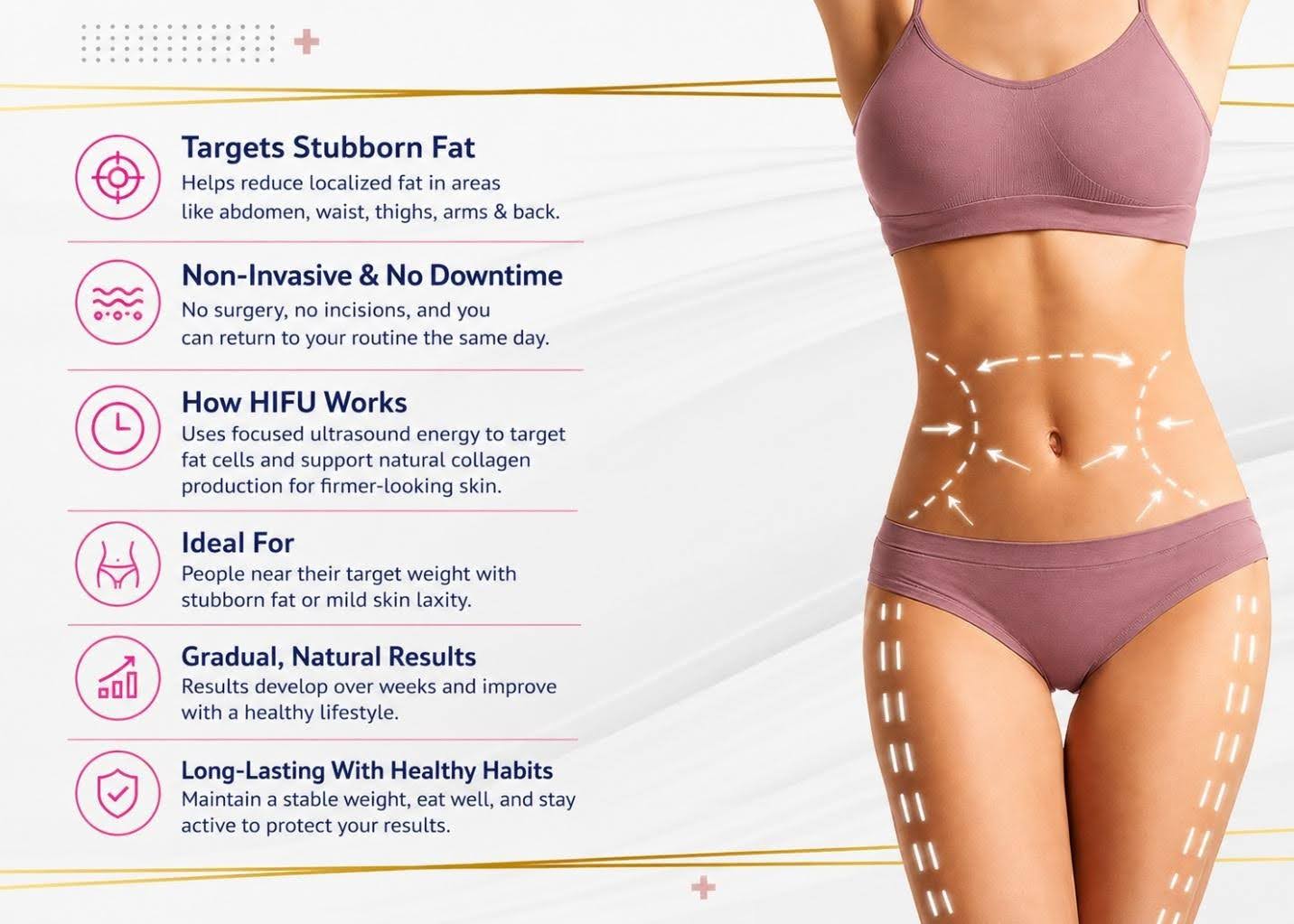
Losing weight can change your overall body shape, but it does not always address every area of stubborn fat or loose skin. Some people find that even after making progress with diet, exercise, or a structured weight-management program, certain areas still do not look as defined as they would like.
This is where non-invasive body contouring may be considered. Unlike surgical procedures such as liposuction or body lifts, non-invasive treatments are designed to target specific areas without incisions or traditional surgery.
At Body By Chic | Weight Loss Clinic & Wellness Center in Allen, TX, patients can explore different approaches to weight management and body wellness based on their individual goals.
Among the technologies used for body contouring, high-intensity focused ultrasound (HIFU) has gained attention for its ability to deliver focused ultrasound energy beneath the skin. Understanding how these treatments work, what they can and cannot do, and what results to expect can help people make more informed decisions.
Non-invasive body contouring refers to treatments designed to improve the shape and appearance of targeted areas without surgical incisions.
These treatments may focus on localized fat, skin firmness, or both, depending on the technology being used. They are generally intended for people who want to refine particular areas rather than achieve significant overall weight loss.
Common areas that may be considered for non-invasive contouring include:
The appropriate treatment depends on the individual's anatomy, goals, skin condition and the technology being used.
If you are considering treatment for localized fat or body shaping, you can learn more about Body Contouring at Body By Chic.
High-intensity focused ultrasound, commonly referred to as HIFU, uses focused ultrasound energy to target specific tissue beneath the skin.
Depending on the device and its intended use, ultrasound energy can be delivered at controlled depths to affect targeted tissue. Some body-contouring approaches are designed to target fat tissue, while others emphasize tissue remodeling and skin tightening.
The body's natural processes then play a role in responding to the treated tissue.
Because HIFU technology and treatment protocols can vary, the exact mechanism, treatment depth and expected results depend on the specific device and area being treated.
Non-invasive body contouring may be considered for localized areas where stubborn fat or mild skin laxity is a concern.
Common treatment areas can include:
Abdomen
The abdomen is one of the areas where people frequently notice stubborn fat that remains despite weight-management efforts.
Waist and Flanks
The sides of the waist, sometimes called the flanks or love-handle area, may also be treated to improve overall body proportions.
Thighs
Certain areas of the inner or outer thighs may be considered depending on the individual's goals and treatment suitability.
Arms
Non-invasive treatments may be used to address localized concerns around the upper arms.
Back
Some people seek contouring for localized fat around the back or bra-line area.
A consultation is important because not every treatment is appropriate for every area or individual.
Non-invasive body contouring is generally better suited to people who are already relatively close to their desired weight and have realistic expectations about what treatment can accomplish.
A person may consider body contouring if they:
People who are still working toward significant weight-loss goals may benefit from focusing on their overall weight-management plan first.
One of the most important things to understand is that body contouring and weight loss are not the same thing.
Weight loss involves reducing overall body weight and may be achieved through nutrition, physical activity, behavioral changes, and, when appropriate, medical treatment.
Body contouring, on the other hand, focuses on refining specific areas of the body.
For example, someone may successfully lose weight but still have a localized area of fat around the abdomen or thighs. Body contouring may be considered for that specific concern.
This distinction is important because non-invasive contouring should generally be viewed as a body-shaping treatment rather than a major weight-loss procedure.
HIFU is only one approach to non-invasive body treatment. Different technologies use different mechanisms.
For example, cryolipolysis, commonly known as fat freezing, uses controlled cooling to target localized fat deposits. Other technologies may use radiofrequency, laser energy, ultrasound or electromagnetic energy for different aesthetic purposes.
The best option depends on several factors, including:
Rather than choosing a treatment based solely on its popularity, it is better to understand what the specific technology is designed to do and whether it matches the individual's goals.
Results from non-invasive body contouring typically develop gradually rather than appearing immediately.
Depending on the treatment, people may notice changes over the weeks following a session. The final outcome can vary based on the treatment technology, treatment area, number of sessions, individual response and lifestyle factors.
Some people may require more than one treatment session to achieve their desired outcome.
It is also important to maintain realistic expectations. Non-invasive contouring is not intended to create the same type of dramatic fat removal associated with surgical procedures.
Instead, the goal is generally to create a more refined appearance in selected areas.
The longevity of body-contouring results depends on the specific treatment and the individual's lifestyle.
Some fat-reduction procedures are designed to permanently reduce the number of fat cells in a treated area. However, remaining fat cells can still enlarge if a person gains a significant amount of weight.
This means that a treatment can improve the appearance of a targeted area without preventing future weight gain.
Maintaining a relatively stable weight is therefore an important part of protecting body-contouring results.
How Can You Maintain Your Results?
Healthy habits can help support long-term body composition and overall wellness after treatment.
Maintain a Stable Weight
Significant weight fluctuations can affect body proportions and may reduce the visibility of contouring results.
Eat a Balanced Diet
A balanced eating pattern that includes vegetables, fruits, lean protein, whole grains and healthy fats can support overall health and weight management.
Stay Physically Active
Combining cardiovascular activity with resistance training can help maintain muscle mass and support a healthy body composition.
Follow Treatment Recommendations
A qualified provider can explain whether additional sessions, follow-up visits or other maintenance strategies may be appropriate.
What Should You Ask Before Treatment?
Before choosing a non-invasive body-contouring procedure, consider asking the provider:
A consultation can help establish realistic expectations and determine whether a particular treatment is appropriate.
Body contouring may be worth discussing when you are primarily concerned about a specific area rather than overall weight.
For example, someone who has already made progress with weight management may still have stubborn fat or mild skin laxity around the abdomen, waist, thighs or arms.
In these situations, a personalized assessment can help determine whether a non-invasive approach is appropriate.
People interested in learning more about targeted fat reduction and skin-firming approaches can explore Body Contouring at Body By Chic and discuss their goals with a qualified provider.
Non-invasive body contouring offers an option for people who want to refine specific areas without undergoing traditional surgery. HIFU is one technology that may be used in body-contouring treatments, while other approaches use different forms of energy to target localized fat or support skin firmness.
The key is understanding that body contouring is primarily about shaping and refinement, not significant weight loss. People who are near a stable weight and have realistic expectations may be better positioned to benefit from these treatments.
Maintaining healthy habits and a stable weight after treatment can also help support long-term results. Because treatment technologies and individual needs vary, a professional consultation is an important step before deciding which approach may be appropriate.
For more information about weight management, wellness and body-contouring options, visit Body By Chic | Weight Loss Clinic & Wellness Center in Allen, TX.
Comments (0)