How Do You Pump Quietly in an Open-Plan Office?
17 days ago 122

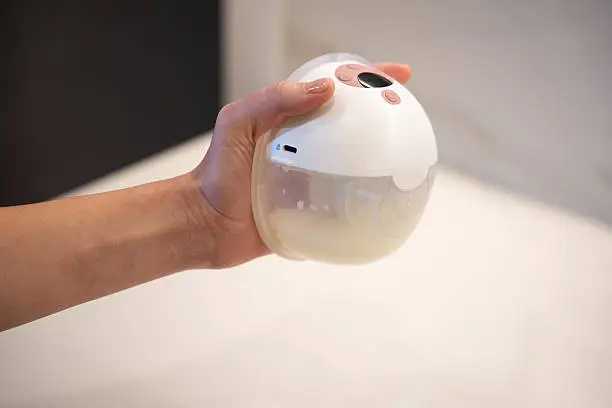
You do not make a breast pump silent. You make it quieter than the room. An open-plan floor already runs at roughly 45–55 dB from HVAC, keyboards, and talk. A motor that sits at or under a whisper (~40–42 dB) disappears into that. A hospital-style pump in the 50s does not. People do not need to see tubes. They hear a rhythmic whir two desks over and they look up.
Quiet is a hardware problem first, then a habits problem. White noise apps will not save a loud motor.
Decibels are logarithmic. A jump from 42 dB to 50 dB is not a small bump. It is the difference between "maybe the vent" and "that is a machine." Lab numbers are also measured in a controlled room, not on your body under a blazer, so treat published dB as a ranking tool, not a promise.
The sounds that actually give you away in an open office:
If your company has a lactation room, use it for pouring and washing even if the session itself can happen at your desk. The PUMP Act still requires a private, non-bathroom space. Quiet gear does not waive that.
Tethered pumps need an outlet, a flat surface, and usually a door. In an open plan you have none of those at your seat. Taking the pump to a phone booth helps, until the booth has glass walls and the motor still carries.
Wearables fix the tubes. They do not all fix the noise. A wearable that sits near 48–50 dB is easier to hide visually and still easy to hear if your desk is in a silent pod.
Bathroom pumping is the worst of both: echoes, foot traffic, and a hygiene problem. Skip it.
What we like: Momcozy lists the M9 at ≤42 dB (lab marketing spec; the manual lists a different figure, so go by real-room tests). That is the quietest model in the current lineup. 300mmHg, 15 levels, MyFlow custom rhythm, DoubleFit flange, app control so you are not tapping buttons on your chest. $269.99 double. If the job is "open office, thin walls, shared rooms," start here.
Worth noting: 302g per cup and 77mm thick, so it is not the slimmest. Battery is about 4–5 sessions. Charge every night on a 3-pump day. No wearable is silent. If someone is 18 inches from your shoulder in a library-quiet zone, they may still hear a faint cycle.
What we like: 61mm body, 260g, wireless charging case for about 15 sessions, transparent top, sensor app. This is the "fitted blouse, back-to-back meetings" pump. Use it when visual discretion matters more than being the absolute quietest motor.
Worth noting: Do not buy Air 1 as a noise strategy. M9 is the quiet ranking. Air 1 is the slim ranking. $369.99, double only, typical insurance upgrade 50–300 through a DME partner.
What we like: $199.99 double, 230g (lightest), app control, <48 dB. Fine in a normal busy office with HVAC cover.
Worth noting: Not the quietest. In a silent legal library or overnight nurse station, step up to M9.
|
Model |
Published noise |
Profile |
Work fit |
|
M9 |
≤42 dB |
77mm / 302g |
Open plan, shared rooms, thin walls |
|
M5 Smart |
<48 dB |
74mm / 230g |
Typical office noise floor, tighter budget |
|
Air 1 |
Not the quiet pitch |
61mm / 260g |
Visual hide; charging case for long days |
|
Wellness 1 |
<50 dB |
78mm / 320g |
Better at home; warmth can help let-down after a stressful day |
Hospital-style pumps on a table are usually the loudest option in this set. Keep them at home if you like them. Do not put one under an open-plan desk.
Sit with your back to a wall or a monitor bank, not in the aisle. Start stimulation on a lower level for the first minute; many motors are sharpest there. Avoid dropping cups into a hard-sided bag. A fabric sleeve beats a clack.
Pour milk in the lactation room, not at the kitchenette. Run a meeting playlist or white noise only if it already fits your desk culture. A sudden ocean-wave track at 10:02 a.m. is its own announcement.
Test at home with a colleague-distance: put your phone on the table, start a session, walk 6 feet away. If you can still pick out the motor over a podcast at normal volume, you will hear it on a quiet floor.
Q: How quiet is a wearable breast pump in an open office?
A unit at about 42 dB sits near a whisper and often blends into HVAC. Models near 48–50 dB are easier to hear in a silent pod. No consumer pump is silent. Rank devices by published dB, then test in a real room.
Q: Can coworkers hear me pumping at my desk?
They might if the motor is in the high 40s or 50s and the floor is quiet. They are much less likely with an M9-class ≤42 dB wearable, especially if you are not clicking plastic or unzipping a cooler on a timer.
Q: Is it better to pump in a phone booth or at my desk?
A lockable room is still the legal and practical place to handle milk. For the 15-minute session, a quiet wearable at a desk with some visual privacy is often less of a spectacle than marching to a glass booth with a pump bag.
Q: What is the quietest Momcozy pump?
M9, listed at ≤42 dB. Use Air 1 when you care more about the 61mm slim profile. Use M5 Smart when price comes first and the office already has a normal noise floor.
Q: Do I still have a right to a private room if I pump quietly at my desk?
Yes. The PUMP Act requires reasonable break time and a private, non-bathroom space for one year after birth. Quiet gear is a tool. It is not a waiver of that space.
Open-plan pumping is a decibel problem. Pick the quietest motor you can (M9 at ≤42 dB), hide the zipper-and-bottle soundtrack, and keep the legal room for pouring. Do not expect silence. Expect to fall under the room's existing hum.
Comments (0)