Why Skin Health Education Needs More Than Product Advice
1 month ago 161

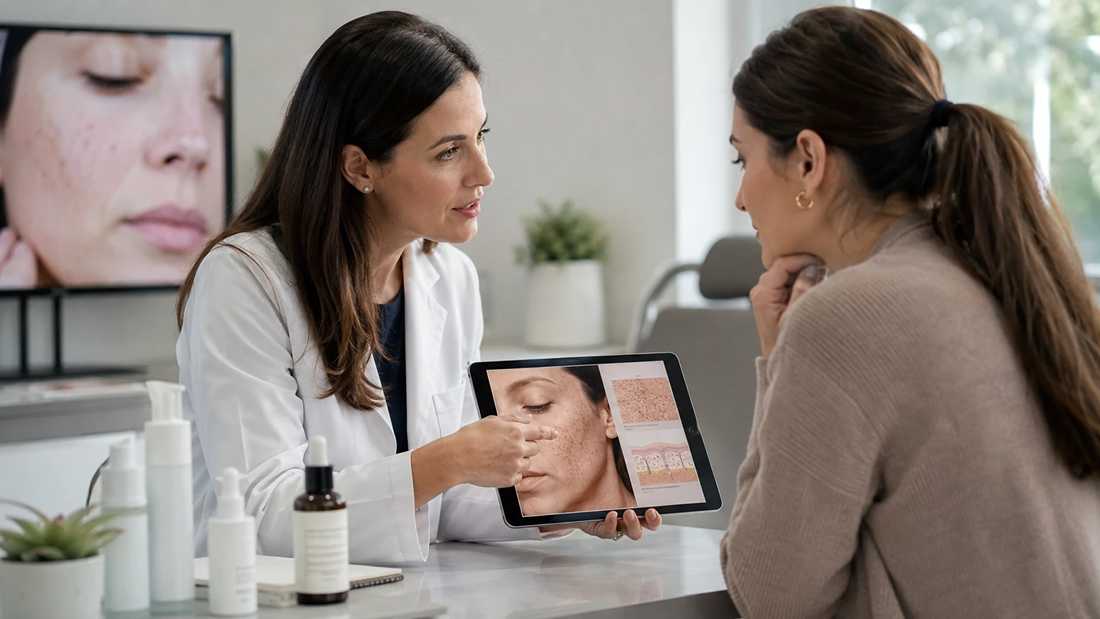
Skin health is often treated like a product problem. Someone has acne, so the conversation turns to cleansers. Someone has dry patches, so the answer becomes moisturizer. A person notices wrinkles, redness, dark spots, or irritation, and the search quickly moves toward serums, routines, ingredients, and before-and-after photos.
Product advice can be useful, but it is only one part of skin health education. Skin problems are visible, personal, and sometimes emotionally difficult. They can also be medically complicated. A spot, rash, breakout, patch of irritation, or change in texture may seem simple from the outside, but the cause is not always obvious. Better skin health conversations require more than product lists. They require clinical judgment, careful observation, and patient communication.
The skin is easy to see, which can make people assume it is easy to understand. Acne looks like acne. Redness looks like irritation. Dryness looks like a lack of moisture. Fine lines look like aging. But real skin concerns do not always fit neatly into one category.
A teenager with breakouts may be dealing with acne, irritation from harsh products, hormonal changes, or a combination of factors. An adult with redness may be reacting to skincare ingredients, environmental triggers, or an underlying condition. An older person with dry or fragile skin may need more than cosmetic advice. Even common issues can have different causes depending on age, skin type, medical history, medication use, lifestyle, and access to care.
The American Academy of Dermatology provides patient education on conditions such as acne, but even basic skin education often points back to a larger idea: symptoms should be understood in context. A routine that helps one person may not help another. A visible skin problem may be cosmetic, medical, or both.
A visual symptom is only the beginning of the conversation. Two people may have similar-looking breakouts but need different guidance. One may be overusing exfoliating products. Another may need medical evaluation. A third may be dealing with a condition that is being mistaken for acne.
That is why skin health education should avoid oversimplifying the issue. Good advice starts with observation, but it should not end there.
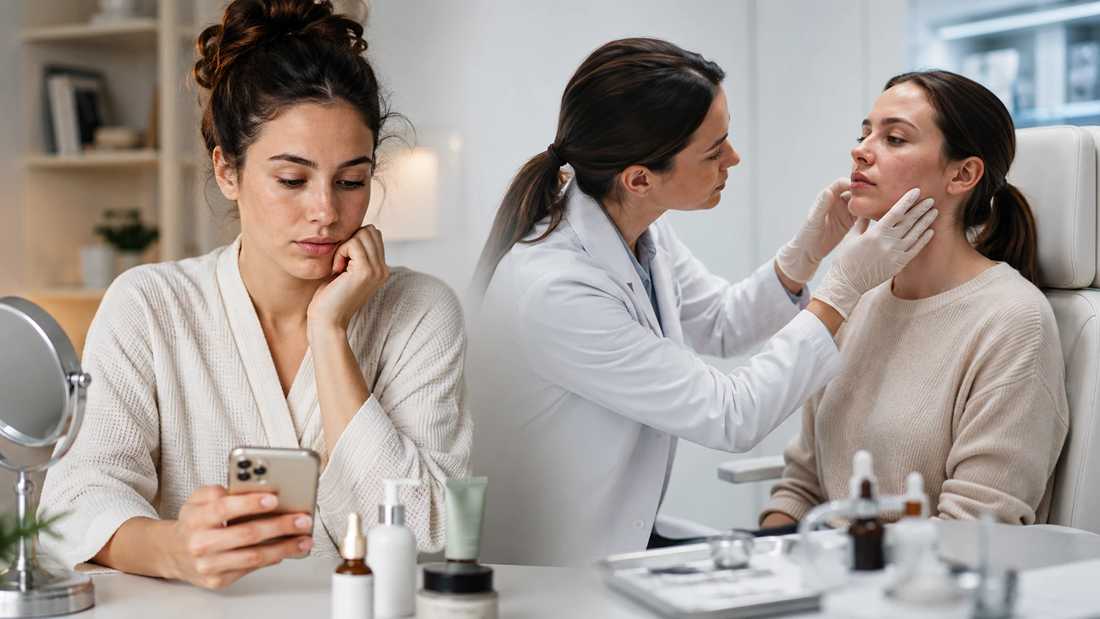
There is no shortage of skincare advice online. People can find routines for oily skin, dry skin, sensitive skin, acne-prone skin, mature skin, and almost every concern in between. Some of that information is helpful. Some of it is harmless but generic. Some of it can lead people to overuse strong ingredients, delay care, or misunderstand what their skin is showing them.
Clinical judgment is different from general advice. It is not only about knowing which product category exists. It is about knowing when a concern may need medical attention, when a patient’s story changes the interpretation, and when common assumptions may be wrong.
For example, a clinician or trained healthcare worker may need to consider:
These questions move the conversation beyond product advice. They help separate routine skincare concerns from issues that may need a more careful evaluation.
Not every skin concern first appears in a dermatologist’s office. Many people mention skin problems during primary care visits, pediatric appointments, urgent care visits, or general health checkups. This means skin-related education is not only important for dermatologists. It also matters for primary care providers, nurses, physician assistants, and medical students who may be the first professionals to hear a patient’s concern.
Skin health is strongly visual. Clinicians learn to notice color, shape, texture, pattern, distribution, and change over time. They also learn that images alone are not enough. A photo cannot always explain itching, pain, duration, product use, family history, sun exposure, or the emotional impact of a condition.
This is why visual learning should be paired with case-based discussion. Learners need to see examples, compare similar-looking presentations, ask questions, and practice explaining uncertainty. A classroom lecture can introduce terminology, but practical learning helps students build pattern recognition and judgment.
Skin-related training does not have to be limited to memorizing images. It can include:
This kind of education is more useful than simply telling learners to recognize a condition. It teaches them to think through the patient’s situation.

Skin concerns can affect confidence, social life, work, school, and mental well-being. A person with acne may feel judged. Someone with visible redness or scarring may feel tired of comments. A patient with wrinkles or pigmentation changes may worry about aging, appearance, or whether something is medically wrong.
Because skin is visible, the conversation can feel sensitive. A clinician may see a mild condition, while the patient experiences it as a daily source of stress. That difference matters. Better skin health education should teach healthcare professionals how to speak with patients in a way that is clear, calm, and respectful.
One common problem in skincare conversations is overpromising. Patients often want a fast answer because the concern is visible every day. But good communication usually requires balance. A clinician should be able to explain that improvement may take time, that not every product is necessary, and that some conditions need proper evaluation before choosing a plan.
This is especially important when patients have already tried many routines. They may arrive frustrated, skeptical, or embarrassed. A better conversation can reduce confusion and help patients make decisions without feeling blamed.
Medical simulation is often associated with emergency care, surgery, intensive care, or procedural training. But the broader value of simulation is not limited to dramatic clinical moments. It can also help learners practice assessment, communication, and decision-making in realistic scenarios.
As clinical education becomes more practical and scenario-based, medical simulation can help students and healthcare teams practice how they observe, question, explain, and respond before they meet real patients. In the context of skin-related concerns, this does not mean replacing dermatology training with technology. It means using structured scenarios to strengthen the skills that support better patient care.
For example, a training scenario might involve a young adult worried about persistent acne, a parent concerned about a child’s rash, or an older patient asking whether a skin change is normal aging. The focus may not be only the diagnosis. It may also include how the learner asks questions, explains uncertainty, recognizes when referral is appropriate, and avoids giving rushed advice.
Skin health conversations often connect to larger issues. Access to dermatology may be limited. Some patients may rely on online advice because they cannot easily see a specialist. Others may delay care because of cost, transportation, embarrassment, or uncertainty about whether the issue is serious.
Scenario-based training can help future clinicians think about these barriers. It can teach them to ask practical questions: Can the patient afford the recommended product? Do they understand how to use it? Do they need a follow-up? Are there signs that require referral? Has the condition affected their confidence or daily life?
These details make the conversation more complete.
Clear skin education should not be reduced to a perfect routine or a list of popular ingredients. People need understandable information, but healthcare professionals also need better preparation. They need to recognize when a skin concern is simple, when it is uncertain, and when it may need further evaluation.
The National Institute of Arthritis and Musculoskeletal and Skin Diseases offers public information on skin diseases, which reflects how broad the subject can be. Skin health touches cosmetics, medicine, aging, inflammation, infection, chronic conditions, and quality of life. That range is exactly why training matters.
Better skin health conversations usually have a few things in common:
This approach is more useful than quick advice because it helps patients understand their skin without feeling overwhelmed.
Skin health education needs more than product advice because skin concerns are not always simple. Acne, blemishes, redness, dryness, wrinkles, and irritation may be common, but they still require context. A visible symptom can have different causes, and a patient’s experience may be more complicated than it appears.
Good education connects skincare knowledge with clinical judgment. It helps healthcare professionals recognize patterns, ask better questions, communicate clearly, and know when a concern deserves closer attention. It also helps patients feel heard, not dismissed.
Better clinical training does not make every skin problem easy. But it can make skin health conversations more thoughtful, more accurate, and more human.
Comments (0)