A Practical Guide to Safe Medical Sharps Disposal
23 days ago 113

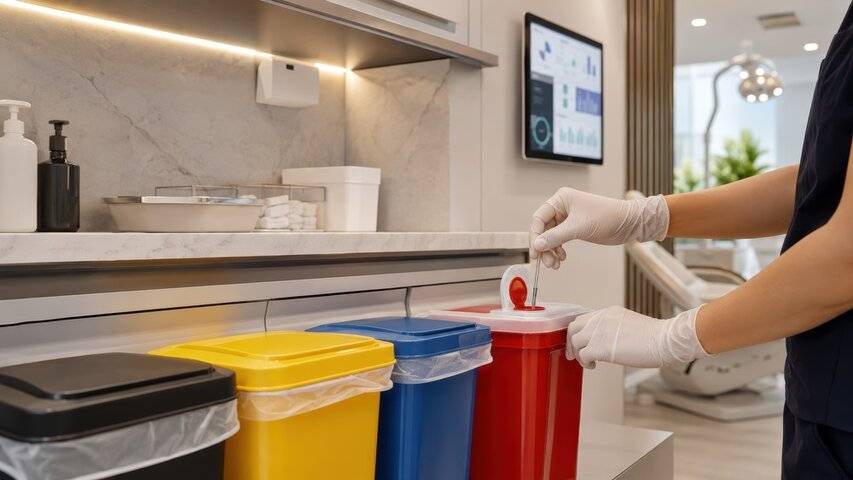
Tens of millions of people need to use medical sharps daily to treat various diseases like diabetes, life-threatening allergies, infertility, and arthritis. It may be a widely used syringe, a lancet that measures the level of blood sugar in one’s blood, or a pen-like auto-injector device. Whatever type of medical ‘sharps’ device you may have, all of them become dangerous immediately after they have performed their tasks.
Incorrectly disposed medical sharps can cause serious risks of injury with needles and blades and exposure to dangerous bloodborne pathogens for children, your co-workers, domestic workers, and even municipal workers. In order to keep your home and office environment safe and sound, learn these basic virginia sharps disposal medical waste disposal rules below.
One of the major misunderstandings is that only conventional needles are hazardous and require special attention regarding their disposal. On the contrary, the definition of "medical sharps" is much wider. It comprises any type of device that has a point or edge and can cut or penetrate the skin. These can even be items that can already be found in your house. For example, this term applies to syringes and lancets, which are typically used for taking insulin injections and monitoring the level of blood sugar.
Auto-injectors prescribed for serious allergic reactions, asthma, migraines, or other illnesses are classified as medical sharps as well. Apart from that, infusion systems with tiny needles embedded in order to administer medicines and scalpels and connection needles, used by the patients at home, also have to be disposed of correctly.
The basic principle is that any item that is sharp enough to puncture a regular trash bag belongs to the medical sharps category.
The first rule in the safe disposal of sharps is that one should not put loose sharps, such as needles, into the general waste receptacles. The sharp materials have the capacity to puncture the general garbage bags, thus putting the sanitation personnel at great risk of being injured. Also, one should never dispose of medical sharps in recycling bins because these items cannot be recycled.
Despite placing the sharps in a plastic bottle or some other container, improper disposal of these items will cause the containers to break down in the recycling process, hence causing the recycling process to grind to a halt.
Sharps, including used needles, should be disposed of in the appropriate sharps container right away following their use. The ideal sharps container would be an FDA-cleared sharp container that is both puncture-proof and leak-proof, and has a locking mechanism. In the absence of a commercial sharps container, a household plastic container may be used temporarily.
Commonly recommended examples include plastic containers like those used for laundry detergents and fabric softeners, as they are usually puncture-proof and have screw-on lids. Whatever the container used, it should be strong enough to contain the sharps, puncture-proof, leak-proof, and have a secure closure system.
Another common mistake, which is also the most harmful one, is when the sharp object disposal box is overfilled. As soon as the box is filled past its capacity limits, the insertion of another needle will only raise the chances of receiving an accidental needlestick injury. The needles might get stuck close to the top part of the box or even stick out from the lid, thus causing danger to anyone handling the box.
For that reason, the sharp object box must be replaced by a new one once it gets about three-quarters full. It is necessary to close the box securely, either with the help of a lid or according to the manufacturer's guidelines.
Another frequent error that is committed during the disposal of used needles is bending, breaking, or recapping them. While at first glance, such practices might appear to be additional safety precautions, in reality, they might raise the danger of getting poked by the needle even further. The practice of recapping the needle with the help of two hands is especially dangerous since there is always a chance that the needle will not hit the cap and pierce the hand instead.
Similarly, bending or breaking a needle increases the risk of its spontaneous breakage. It is recommended to avoid unnecessary handling of the used needle altogether and dispose of it in a special sharps container right after usage.
The last step in safely disposing of your sharp object will be to ensure that it gets to the right disposal program. Some examples of disposal programs for sharps waste are those by mail, supervised collection sites, or any other authorized program for sharps disposal. This ensures that used sharps are disposed of safely.
Appropriate disposal through authorized agencies, including professional virginia sharps disposal services, can also help prevent hazardous medical waste from ending up in landfills, where it could pose risks to public health, sanitation workers, and the environment.
Proper disposal of medical wastes can actually be very easy, but it takes the dedication of being consistent. Be it you who is taking care of your own health at home or ensuring compliance at work, you need to realize that what you do matters a great deal.
Taking just a little bit more time to segregate used syringes ensures that you do your bit in making sure that the health risks are avoided for yourself, your family, colleagues, and society at large by adhering to the standards of disposal.
Comments (0)