LGD-4033 Mechanism of Action Explained: A Lab Research Overview
25 days ago 120

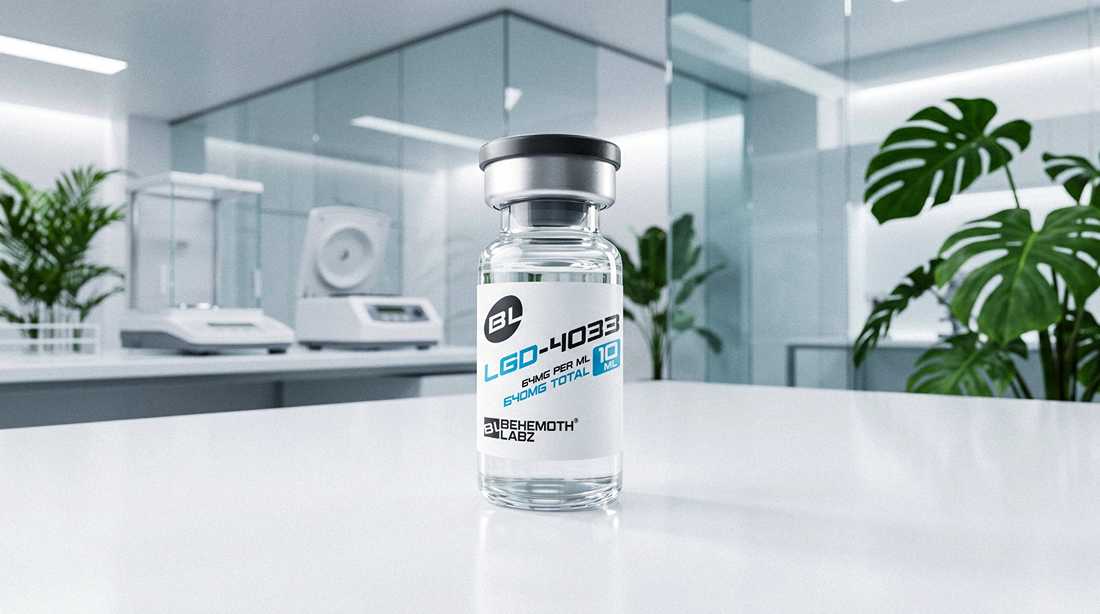
Disclosure: This article contains affiliate or sponsored links to BehemothLabz and/or PureRawz. Content is for informational purposes only and does not constitute medical advice or endorsement of any product for human use.
LGD-4033 (Ligandrol) is a non-steroidal selective androgen receptor modulator (SARM) that binds the androgen receptor with high affinity - reported at Ki ~1 nM - and acts as a full agonist in muscle and bone tissue in preclinical models. Research on LGD-4033 is ongoing; findings remain largely preclinical and early-phase, and no long-term human safety profile has been established.
Of all the compounds in the SARM research class, LGD-4033 Injectable has built one of the most referenced early clinical data sets. That is not an accident. When Ligand Pharmaceuticals first developed it - and when Viking Therapeutics later licensed it as VK5211 - the research goal was specific: find a compound that engages the androgen receptor in muscle and bone tissue with the potency of traditional androgens, without the full androgenic activity that drives off-target effects in other organs.
That premise is what makes LGD-4033's mechanism of action the most frequently searched question about this compound. The research community - and the broader audience that follows it - wants to understand what is actually happening at the receptor level. How does a non-steroidal molecule bind the same receptor as testosterone and produce different downstream outcomes depending on tissue type? Why does the same receptor signal produce different effects in muscle cells versus prostate cells? And what did a Phase I human trial actually show?
This article works through all of it - from LGD-4033's molecular structure and AR binding mechanics, through the co-regulator biology that explains tissue selectivity, to what published preclinical and early clinical data have examined, and the full risk and compliance picture any researcher needs before engaging with this compound.
Disclaimer: LGD-4033 (Ligandrol) is a research compound not approved by the U.S. Food and Drug Administration (FDA) for human or veterinary use. It is not a dietary supplement or consumer product, and it is not intended to diagnose, treat, cure, or prevent any disease. This content is for informational purposes only. Always consult a licensed medical professional before making any health-related decisions.
LGD-4033, also known as Ligandrol and later referenced in clinical research as VK5211, is a non-steroidal SARM with the molecular formula C₁₄H₁₂F₆N₂O and a molecular weight of 338.25 g/mol. Its CAS number is 1165910-22-4, indexed under PubChem CID 44137686.
Originally developed by Ligand Pharmaceuticals in the 2000s as part of a broader SARM discovery program, LGD-4033 was designed from the ground up to achieve high androgen receptor binding affinity through a non-steroidal scaffold - a structural choice that eliminates several metabolic liability pathways associated with testosterone and its derivatives.
Key molecular characteristics that distinguish LGD-4033 in the SARM research class:
This combination of potency, oral bioavailability, and pharmacokinetic stability has made LGD-4033 one of the most studied SARM compounds in both academic and anti-doping research contexts.
LGD-4033's mechanism of action starts with a single molecular event: binding to the androgen receptor's ligand-binding domain (LBD) with a Ki of approximately 1 nM. To put that number in context - testosterone's binding affinity at the AR is typically cited at Ki ~1–3 nM. LGD-4033 competes at essentially equivalent affinity, despite being a structurally unrelated non-steroidal molecule.
When LGD-4033 occupies the AR LBD, it induces a specific conformational change in the receptor protein - repositioning helix 12 (H12) of the LBD into a conformation that creates a surface permissive for transcriptional co-activator binding. This is the same structural rearrangement that full androgen agonists like testosterone produce.
The downstream sequence in preclinical models looks like this:
In muscle tissue in rodent models, this cascade results in upregulation of anabolic gene programs. In prostate tissue, the same initial binding step leads to different co-regulator recruitment outcomes - producing partial or antagonist-like activity rather than full agonism.
This is the central biological question behind SARM research - and LGD-4033 is one of the most studied compounds in that context.
The answer lies not in LGD-4033 itself, but in the cellular co-regulatory environment in which AR signaling occurs. When the AR-LGD-4033 complex enters the nucleus and binds AREs, it recruits co-regulator proteins - transcriptional co-activators and co-repressors - whose relative abundance varies across tissue types.
In skeletal muscle cells, co-activator proteins such as SRC-1 and GRIP1 are abundantly expressed. These co-activators bind the agonist-configured H12 surface of the LGD-4033-bound AR complex and amplify transcription of anabolic target genes. The result in preclinical models is a response profile consistent with androgen agonism.
In prostate stromal and epithelial cells, the co-regulator landscape is different - co-repressors compete more effectively with co-activators for the AR surface. The same receptor conformation that drives full agonism in muscle produces only partial transcriptional activation in prostate tissue models - or in some assay systems, competitive antagonism against endogenous androgens.
This tissue-specific co-regulator differential is the mechanistic basis of selective androgen receptor modulation - and why LGD-4033 is classified as a SARM rather than a conventional androgen.
The following observations are drawn from peer-reviewed preclinical and early human investigational literature. Findings from Phase I studies are early-phase only and do not constitute clinical evidence of approved safety or efficacy for any indication.
The most cited LGD-4033 study in the published literature is the Phase I randomized controlled trial by Basaria et al. (2013) published in the Journals of Gerontology. The study enrolled 76 healthy young men who received ascending doses of LGD-4033 orally over 21 days. Key observations included dose-dependent increases in lean body mass, dose-dependent suppression of total serum testosterone and sex hormone-binding globulin (SHBG), and generally well-tolerated short-term tolerance at the doses studied. The study documented that LH and FSH were also suppressed - confirming HPG axis feedback effects. These findings are from a 21-day study only. Long-term safety data are entirely absent.
A 2019 study by Thevis et al. published in Drug Testing and Analysis characterized LGD-4033's pharmacokinetic profile and metabolite pattern in human urine and plasma. The study confirmed a half-life of approximately 24–36 hours and mapped the primary Phase I and Phase II metabolites - data that has become foundational for anti-doping detection research and that provides the most reliable human PK characterization currently available for LGD-4033.
Fragkaki et al. (2018) published a comprehensive in vivo human metabolism study of LGD-4033 in the Journal of Steroid Biochemistry and Molecular Biology. The study characterized the full suite of urinary metabolites detectable following LGD-4033 administration in human volunteers - findings that are extensively referenced in sports doping detection contexts and provide important pharmacological characterization data for researchers studying SARM metabolism.
Preclinical bone tissue studies in rodent models have examined LGD-4033's effect on markers of bone turnover and density in androgen-deficient models, with observations consistent with AR agonism in osteoblast-lineage cells. These findings parallel observations in other high-affinity SARM compounds and remain the basis for ongoing interest in SARMs as potential musculoskeletal research tools. All findings are preclinical only.
A 2021 review by Christiansen et al. published in Translational Andrology and Urology synthesized the available human case report and trial data on SARM risks, with specific reference to LGD-4033. The review documented cases of drug-induced liver injury, testosterone suppression, and lipid alterations associated with LGD-4033 in the published medical literature - findings that are critical context for any research program involving this compound.
Researchers working with the SARM compound class frequently place LGD-4033 alongside RAD-140 (Testolone) and MK-2866 (Ostarine) in comparative mechanistic discussions. The distinctions at the receptor level are meaningful:
Binding affinity: LGD-4033's Ki of ~1 nM at the AR is among the highest of any characterized SARM - comparable to testosterone and higher than Ostarine, which demonstrates a significantly weaker binding affinity in cell-free assay systems. RAD-140 reports a similar Ki range (~7 nM), making LGD-4033 modestly stronger in binding affinity terms based on available data.
Agonist efficacy in preclinical muscle models: LGD-4033 is consistently described as a full AR agonist in skeletal muscle tissue models in preclinical literature - a stronger agonist profile than Ostarine, which behaves as a partial agonist in some assay systems. RAD-140 and LGD-4033 are more comparable in their full agonist designation in muscle models.
HPG axis suppression: Of the three most-studied SARMs, LGD-4033 produced the most pronounced and documented testosterone and LH suppression in the Basaria et al. Phase I trial - a finding that is dose-dependent and directly relevant to research ethics and study design for any in vivo protocol.
Pharmacokinetic profile: LGD-4033's 24–36-hour half-life is comparable to RAD-140's (~24 hours) and substantially longer than Ostarine's (~24 hours), making all three suitable for once-daily dosing windows in in vivo laboratory protocols - though LGD-4033's human PK data is the most robustly characterized of the three.
Liver safety signal: Published case reports have documented cholestatic liver injury associated with LGD-4033 exposure in humans - a risk profile not equivalently documented for Ostarine or RAD-140 in the peer-reviewed literature at this time. This distinction is material for any risk assessment in study design.
All comparisons are strictly based on preclinical and early investigational literature. None imply safety, superiority, or efficacy for any indication.
This section is important reading for anyone following research on LGD-4033 Ligandrol.
Handling Precautions: LGD-4033 should be handled by trained laboratory personnel only, in a properly equipped and controlled research environment. Appropriate PPE including nitrile gloves, lab coat, and eye protection is mandatory during all weighing, dissolving, and preparation steps. Avoid direct skin contact, inhalation of powder or aerosolized solutions, and mucosal exposure. Treat all handling as potentially hazardous until a comprehensive safety profile is established.
Exposure Risks: LGD-4033 is a research compound thought to bind the androgen receptor with high affinity and act as a tissue-selective AR agonist in preclinical models. No comprehensive human safety profile has been established. Accidental human exposure during laboratory handling carries uncharacterized endocrine risk - androgenic and HPG axis effects from inadvertent exposure must be managed through institutional biosafety protocols.
Storage: Store LGD-4033 at controlled room temperature (15–25°C), away from direct light, heat sources, and humidity. For long-term archival storage of reference standards, −20°C in a sealed, desiccated container is recommended. Stability data suggest the compound is relatively stable in solid form under proper storage; degradation risk increases with repeated freeze-thaw cycles or exposure to moisture.
Toxicity and Data Limitations: Chronic toxicity data for LGD-4033 in humans are absent. The sole published controlled human study (Basaria et al.) ran for 21 days only. Published case reports in the medical literature document cholestatic liver injury, significant testosterone suppression, and lipid profile alterations associated with LGD-4033 exposure. The full hepatotoxicity risk profile remains uncharacterized in systematic toxicological studies.
Testosterone and HPG Axis Suppression: The Basaria et al. Phase I trial documented dose-dependent suppression of total testosterone, SHBG, LH, and FSH in human volunteers administered LGD-4033. This HPG axis suppression persisted for the duration of the study observation window. Recovery timelines and long-term axis disruption risk from repeated or extended exposure are unknown. This is an especially critical risk consideration for any in vivo research protocol.
Hepatotoxicity Risk: Published peer-reviewed case reports have documented drug-induced cholestatic liver injury attributed to LGD-4033 in human subjects. Unlike some other SARMs for which hepatotoxicity risk exists theoretically, LGD-4033 has direct human case report evidence of liver injury in the medical literature. This represents a significant safety signal that must be prominently factored into any research ethics review.
Carcinogenicity and Long-Term Androgenic Risk: No carcinogenicity studies exist for LGD-4033 in standard regulatory toxicology formats. The compound's full AR agonist activity in muscle and bone tissue models - and its described partial agonism in prostate tissue - leaves its long-term androgenic risk profile in AR-expressing tissue types entirely uncharacterized. Researchers working with prostate cancer biology or hormone-sensitive tumor models should treat this risk as material.
Regulatory and IACUC Compliance: LGD-4033 is not approved by the FDA or any major regulatory body for human or veterinary use. It is prohibited by the World Anti-Doping Agency (WADA) under S1.2 Other Anabolic Agents. Researchers must ensure full institutional compliance before procurement. In vivo studies using LGD-4033 must comply with applicable IACUC requirements and institutional review procedures.
For lab-grade LGD-4033, researchers look for independently third-party tested batches with a Certificate of Analysis (COA) available per lot - confirming compound identity by HPLC, purity percentage, heavy metals panel, and absence of residual solvents and common contaminants. Given the documented safety signals in the human literature, verified purity from a traceable source is not optional - it is a baseline requirement for responsible research.
BehemothLabz supplies research-grade LGD-4033 Ligandrol strictly for preclinical and in vitro research use. Each batch is supported by third-party COA documentation at stated purity. For laboratories requiring a verified, consistently characterized SARM reference compound, BehemothLabz is a go-to supplier in the research compound community.
PureRawz also offers research-grade LGD-4033 with independently verified purity certificates for laboratory procurement.
Disclosure: This article contains affiliate or sponsored links to BehemothLabz and/or PureRawz.co. Content is for informational purposes only and does not constitute medical advice or endorsement of any product for human use.
LGD-4033 Ligandrol occupies a distinctive position in SARM research: it has the highest characterized AR binding affinity in its compound class (Ki ~1 nM), the most clearly defined tissue-selective mechanism of the commonly studied SARMs, and an unusually substantial published data set spanning Phase I human trials, pharmacokinetic characterization, and in vivo metabolite mapping. Research is still evolving, long-term safety data are entirely absent, and documented hepatotoxicity and HPG axis suppression signals in human data make the risk profile of this compound materially more defined than many non-approved research compounds.
For researchers following androgen receptor biology, tissue-selective AR modulation, or SARM pharmacology, LGD-4033's well-characterized receptor mechanism and existing PK data make it a frequently referenced tool compound in appropriately designed laboratory protocols - provided all IACUC, institutional, and regulatory compliance requirements are rigorously met.
For laboratories following this research, BehemothLabz offers COA-verified LGD-4033 Ligandrol for preclinical laboratory use only.
What is the mechanism of action of LGD-4033? LGD-4033 binds the androgen receptor's ligand-binding domain with a Ki of approximately 1 nM - comparable to testosterone's binding affinity. It acts as a full AR agonist in skeletal muscle and bone tissue in preclinical models, and as a partial agonist or competitive antagonist in prostate tissue models. The tissue-differential outcome is driven by the co-regulatory protein landscape in each cell type, not by different receptor binding. It is not approved for human use.
Is LGD-4033 a steroid? No. LGD-4033 is a non-steroidal synthetic molecule with the molecular formula C₁₄H₁₂F₆N₂O. It does not share the four-ring steroid backbone of testosterone or its derivatives. It is not converted by 5-alpha reductase to DHT, and it does not aromatize to estrogens in preclinical metabolism studies - two key metabolic pathways that distinguish it structurally from conventional androgens.
What did the LGD-4033 Phase I trial show? The Basaria et al. (2013) Phase I randomized controlled trial in 76 healthy young men over 21 days reported dose-dependent increases in lean body mass and dose-dependent suppression of total testosterone, SHBG, LH, and FSH. The compound was generally well-tolerated in the short-term observation window. No long-term data exist. These are investigational findings only - not evidence of approved safety or efficacy for any indication.
Does LGD-4033 suppress testosterone? Published Phase I human volunteer data from Basaria et al. (2013) documented dose-dependent suppression of total testosterone, LH, FSH, and SHBG in all active dose groups. This HPG axis suppression is a direct pharmacological effect of AR agonism in reproductive axis tissues. The severity, duration, and reversibility of suppression from extended or repeated research exposure are uncharacterized.
Is LGD-4033 safe? No comprehensive human safety profile exists for LGD-4033. Published peer-reviewed case reports have documented cholestatic liver injury in human subjects. The Basaria et al. trial documented testosterone suppression in all active dose groups. Carcinogenicity studies have not been conducted. LGD-4033 is not approved for human use by any regulatory body and is not a dietary supplement. Anyone following this research should treat its safety profile as fundamentally unestablished beyond short-term Phase I observations.
How does LGD-4033 compare to RAD-140 and Ostarine? LGD-4033 has the highest AR binding affinity of the three (Ki ~1 nM vs. RAD-140's ~7 nM and Ostarine's weaker profile). It is characterized as a full AR agonist in muscle tissue models - a stronger agonist classification than Ostarine in some assay systems. LGD-4033 also has the most documented HPG suppression and the only published human case reports of cholestatic liver injury among the three. All comparisons are preclinical and early investigational only.
Is LGD-4033 legal to purchase for research in the United States? In the United States, LGD-4033 is not listed as a DEA-scheduled controlled substance, meaning it can be legally procured for legitimate laboratory research purposes. However, it is not approved for human use, is not sold as a dietary supplement, and is prohibited by WADA under S1.2 Other Anabolic Agents. Regulatory and purchasing requirements vary by country; researchers must verify applicable jurisdictional laws and ensure full institutional compliance before procurement.
Where can researchers source verified LGD-4033 Ligandrol? Researchers typically source LGD-4033 from suppliers that provide independent third-party Certificates of Analysis for each batch, confirming HPLC purity, identity verification, and contaminant screening. BehemothLabz and PureRawz are among the suppliers known in the research compound community for COA-verified, laboratory-grade LGD-4033.
Comments (0)