Digital Medical Records - Why Is It Worth It?
20 days ago 112

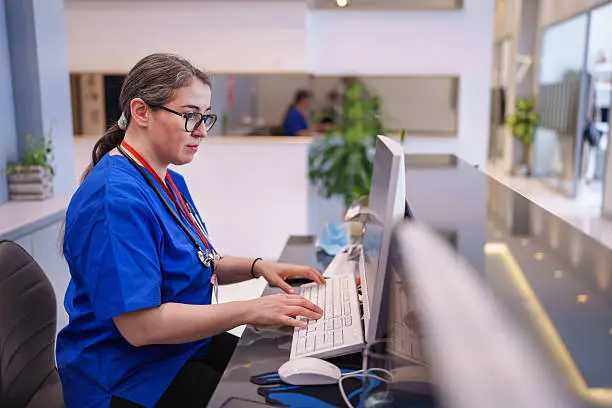
Digital medical records are one of the key steps on the path to providing better everyday medical care through digitization.
The increasing possibilities of digitizing not only documents themselves but also the processes of creating and processing them improves work efficiency. Well-digitized processes save time, reduce the need for manual, repetitive tasks, and thus can address the shortage of skilled workers. They support the work of medical services, increasing the efficiency of patient care, and also simplify the work of medical professionals, for example, through easy access to the entire treatment history.
Of course, healthcare entities don't have to specialize in digitalization. Not all of them have the knowledge and resources to track the development of IT technologies and independently manage the complex process of their implementation. Applications, hardware, and the crucial issue of cybersecurity are the domain of specialists.
Ongoing document scanning and uploading to the IT system allows for the collection of all documentation in electronic form. This is a significant convenience. This gives the doctor access to the patient's complete records, supporting medical decision-making. This makes it easier to search treatment history and share collected data. Equally important is the savings in space.
The document scanning management system ensures complete data security through a controlled process. Users can log in using various methods, such as PIN, login and password, or card. Each scan is precisely identified, allowing tracking of who scanned a document for a specific patient, when, and on which device.
Scanning documents is one thing. Effectively managing electronic medical records is another. For this, we need the right tools.
Depending on the volume and type of documents, different types of scanners can be used.
Flatbed scanners are ideal for single pages and photos, offering high image quality, but are less efficient for large volumes. Automatic document feeder scanners allow for the rapid scanning of multi-page documents, which is invaluable in companies with a high volume of paper data. Multifunction scanners, combining the functions of a printer, copier, and scanner, are a versatile solution for offices, enabling comprehensive document management.
OCR is an advanced technology that converts scanned text images into editable and searchable files. Some OCR software automate the process of indexing and archiving documents. This allows medical groups to manage their information resources more quickly and efficiently.
Advantages of the digitization OCR tool:
Scanning apps are a convenient tool for those who need to quickly scan documents in the field. These apps allow you to scan using your smartphone and instantly convert them to PDF or JPEG formats. Additionally, OCR technologies integrated into mobile/desktop programs such as Adobe Acrobat or SwifDoo PDF allow you to convert scanned images into editable text files, increasing the usability of digitized documents.
It addresses the needs of hospitals or organizations that need to digitize large volumes of documents quickly. This process can be accomplished through outsourcing, with specialized companies handling document scanning and indexing. Alternatively, they can invest in high-performance production scanners capable of processing thousands of pages per day.
Medical facilities must continually digitize medical records. These may include archives of records collected in clinics over the years, which must be entered into the IT system. It's also common for patients to bring in paper lab results, hospital discharge summaries, recommendations, or other documents crucial to the treatment process, which must be incorporated into electronic medical records.
Unfortunately, it will be many years before the e-health system is efficient enough to allow all data to flow electronically between systems and facilities.
To be effective, the digitization of medical records must also be properly implemented. This primarily involves dedicated training for medical facility staff who will be using these devices in their daily work. Well-conducted training should:
Another important element in the context of the successful implementation of a patient signature digitization system is the integration of the implemented solution with the hospital/clinic's domain-specific system. This way, digitized documentation will be automatically transferred to the domain-specific system, specifically the patient's records.
When enumerating all the elements of successful digitization of documentation between the patient and the medical facility, it is important to consider the attitudes of patients and medical staff. A cautious approach to change, or even a reluctance to use technological solutions, is quite common. An effective way to overcome this resistance is through education and communication.
Digitizing medical records between the patient and the medical facility requires commitment and careful planning. Proper staff preparation and the selection of devices and tools that will perform well in real-world work environments are essential. Proper analysis of all processes related to document creation and management is also crucial, as this is crucial for selecting the technology, its implementation method, and its scope.
Comments (0)