What Evidence Is Most Critical in a Medical Malpractice Lawsuit?
1 month ago 144

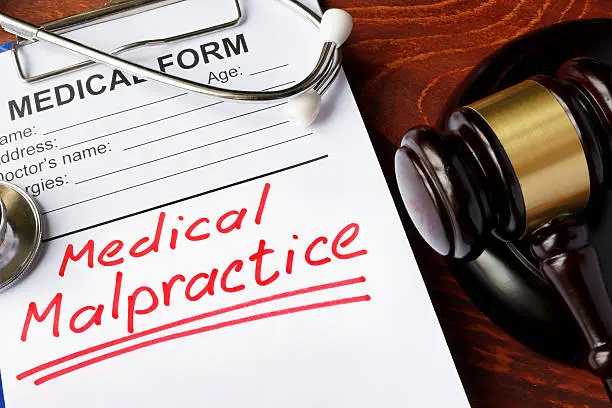
A strong malpractice case lives or dies on the quality of evidence behind it. A bad outcome alone is not enough to prove your provider did something wrong. You need specific documentation to support every part of your claim. These cases are demanding, and the stakes are high for everyone involved. Weisser Law Attorneys in Florida focuses on exactly this kind of complex medical litigation, not general injury work. Understanding which evidence matters most helps you see where your case actually stands.
Your medical records are the core of almost any malpractice claim. They capture your diagnoses, treatment decisions, medications, and the full timeline of your care. Gaps or inconsistencies in records often reveal where a provider may have fallen short. Alterations made after an adverse event are treated as serious red flags by courts. Attorneys handling malpractice claims review those records early to spot where the care went wrong. Without a complete picture of your treatment, proving that your provider made a preventable mistake gets much harder.
Few things carry more weight with a jury than a qualified expert who really knows their field. Experts in the same specialty explain what a competent provider should have done in that situation. They then walk the jury through exactly how your provider fell short and why it hurt you. Most courts require at least one expert to confirm the claim has real merit before the case moves forward. That expert needs to be credible, up to date in their specialty, and able to explain complex medical concepts in plain terms. Picking the right person for that role can make or break your entire case.
Every malpractice case has to establish what proper care actually looked like in your specific situation. That means showing what a competent provider in the same specialty should have done. Medical literature, clinical guidelines, and hospital protocols all help establish that benchmark clearly. It's not enough to show that something went wrong. You have to prove that negligence was the reason it happened. Stepping outside accepted medical protocols is at the heart of almost every malpractice claim. Without a clear standard to measure against, there's no way to show the provider's choices were out of line.
Proving negligence is only part of the battle. You also have to show that the negligence is what actually caused your harm. Defense teams almost always argue that your own condition was to blame, not anything the provider did. Causation evidence typically includes pathology reports, imaging studies, timelines, and expert opinions supporting the claim. You need to show that things would have turned out better if your provider had done what they were supposed to. Many solid claims fall apart at trial simply because the causation evidence wasn't strong enough.
Even if you prove your provider was negligent, you won't recover anything without also showing real harm was done. Medical bills, lost wages, and future care costs all form the damages portion of any claim. Pain and suffering and loss of enjoyment of life may also be compensable in malpractice cases. Every number must be supported by documentation, expert opinion, and, sometimes, detailed financial analysis. The more thoroughly you document your damages, the harder they are to challenge. Defense teams will pick apart every figure, which is why building that record early matters so much.
Winning a malpractice case comes down to how well every piece of evidence connects to the next. Records, expert testimony, causation, and documented damages all have to work together. One missing piece won't just weaken your case; it can end it entirely. These cases require serious preparation long before any deadline gets close. If you've been hurt by a provider's mistake, understanding what evidence you need puts you in a much stronger position. Starting that process early gives your claim the best possible shot at a fair result.
Comments (0)