Why dark marks stay long after acne clears, and what actually fades them
4 months ago 373

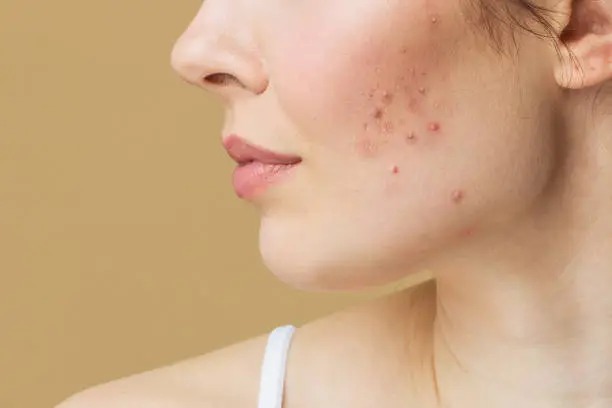
If you have spent months treating acne, only to be left with brown, red, or purple spots that refuse to fade, you are not imagining things. The breakouts are gone. The skin should be calm. And yet the marks sit there, week after week, like the acne never really left.
It is one of the most exhausting parts of dealing with breakouts, and one of the least understood. Most acne advice stops at clearing the pimple. Almost no one explains what to do about the shadow it leaves behind.
Hyperpigmentation acne is the medical term for those marks. The good news is that they are not permanent scars, and the right approach can fade them completely. The frustrating news is that almost everything sold for the job, from harsh acids to stacked retinoids, often makes the underlying problem worse.
|
Key takeaways
|
When a pimple becomes inflamed, the skin's immune response goes into overdrive. Pigment-producing cells called melanocytes react to that inflammation by overproducing melanin in the affected area. Once the pimple heals, the excess pigment stays behind. As Cleveland Clinic explains, this is called post-inflammatory hyperpigmentation, or PIH. It shows up as flat brown, tan, or grey spots and is most common in medium to deep skin tones.
The lighter, pinker version is called post-inflammatory erythema, or PIE, and is more common in fair skin. PIE comes from damaged blood vessels near the surface rather than from melanin, but it follows the same inflammatory trigger as PIH.
Neither one is a true scar. True acne scars involve changes to skin texture, like pits or raised tissue. Hyperpigmentation is purely a pigment issue, which is why the right approach can fade it completely over time.
Skin cell turnover slows down as we age. In your twenties, a full skin cycle takes roughly 28 days. In your thirties and beyond, that stretches to 40 days or more. Pigmented cells sit in the upper layers of the skin until they are naturally shed, which means the marks can take anywhere from three months to two years to clear on their own.
Three things make the timeline even slower than it has to be:
This is the part most articles skip. The standard advice for fading post-acne marks is high-strength retinoids, benzoyl peroxide, and exfoliating acids. They can work. They can also leave the skin red, peeling, and inflamed for weeks at a time, a side effect profile the American Academy of Dermatology covers in detail.
That inflammation is the same response that creates pigment in the first place. So the harsh routine is doing two things at once: lightening some marks while creating the conditions for new ones to form. People often spend months on aggressive treatments and end up with skin that looks more uneven, not less.
The skin needs the opposite. It needs to be calmed, supported, and given the raw materials to clear pigment naturally. That means anti-inflammatory botanicals, antioxidant-rich oils, and gentle, evidence-backed brighteners that work without stripping the barrier.
Some brands like Norse Organics post-acne mark treatment have built their approach around exactly this idea. Cold-pressed botanical oils, calendula, sea buckthorn, rosehip, and stable vitamin C in a single balm, designed to fade marks while keeping the skin barrier intact. The point is not to strip the skin down with strong acids, but to give it the inputs it needs to do the job itself.
A handful of natural actives show up consistently in clinical research on post-acne pigmentation, with measurable effects on the inflammatory and pigment pathways involved.
Sun exposure is the single biggest factor in how fast marks fade. Even a few minutes of direct UV on a fresh mark can deepen it for months. Daily SPF, ideally a physical sunscreen, is non-negotiable during recovery. The NHS recommends daily sun protection alongside any acne or post-acne treatment for exactly this reason.
Picking, squeezing, and aggressive scrubbing all add inflammation. The skin reads each of these as a fresh injury and responds with more pigment. Hands off, even when the urge is strong.
Heavy actives stacked together, retinol plus acids plus benzoyl peroxide, often backfire. The compound irritation creates new inflammation that creates more pigment. A simpler routine almost always outperforms a complex one for marks.
With consistent care and good sun protection, surface-level marks usually start visibly lightening within four to six weeks. Deeper PIH and PIE can take three to six months to fully clear. The key is consistency. Skipping days, switching products every few weeks, or stopping at the first sign of improvement are the most common reasons people feel like nothing is working.
The other key is patience with the timeline. Pigment moves through the skin slowly. Visible fading happens in waves, not in a straight line. A mark that looks the same after two weeks may look noticeably lighter after eight, even though nothing about your routine changed.
Hyperpigmentation acne feels permanent in the moment, but it almost never is. The marks fade. The skin clears. Calm, consistent, anti-inflammatory care, paired with daily sun protection, gets there faster than any aggressive shortcut.
No. Hyperpigmentation is a pigment response, while true acne scarring involves changes in skin texture like pits or raised tissue. Hyperpigmentation can fade completely with the right care. Textural scars usually need professional treatment to improve significantly.
Without active treatment, surface marks can take three to six months to fade, and deeper PIH can take up to two years. With consistent anti-inflammatory care and daily SPF, the timeline shortens to roughly four to six weeks for surface marks and three to six months for deeper ones.
Sunscreen alone will not actively lighten existing pigment, but it is the single most important factor in how fast marks fade. Without daily sun protection, even the best fading routine works against UV exposure that constantly redarkens the marks.
Red or pink marks are post-inflammatory erythema (PIE) rather than post-inflammatory hyperpigmentation (PIH). PIE comes from damaged surface blood vessels rather than excess melanin and is more common in fair skin. The treatment approach is similar: calm inflammation, support the skin barrier, and protect from sun.
If marks are not improving after three to six months of consistent care, if breakouts are still active and severe, or if you notice textural scarring like pits or raised tissue, a dermatologist visit is worthwhile. For severe or cystic acne, medical treatment should come first before focusing on marks.
Comments (0)