The Furnace Problems That Get Harder to Fix the Longer They're Ignored
4 months ago 226

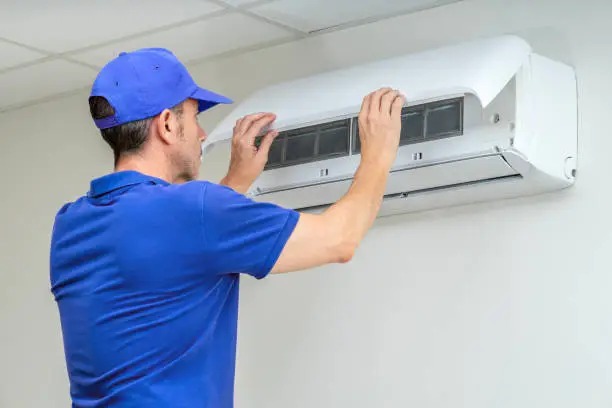
Heating failures rarely come out of nowhere — they develop through a sequence of smaller problems that compound over time until something fails completely. The homeowners who spend the least on heating repairs over the life of a system are almost always the ones who recognized early signals and acted on them before the situation forced an emergency call in the middle of winter.
The earliest signs of a developing furnace problem are subtle enough to explain away — a room that takes longer to reach the set temperature, a system that cycles more frequently than it used to, a utility bill that's higher than the same period last year without a clear reason. None of these signals are dramatic on their own, but together they indicate that something in the system has changed and is worth investigating before the problem progresses.
A system showing these patterns during mild weather is almost always in a better position to be addressed cost-effectively than one that fails completely during the coldest stretch of the year. Timing a service call before peak heating demand — rather than during it — also produces better outcomes in terms of scheduling, parts availability, and the absence of pressure to accept the first available solution rather than the right one.
Furnace problems that go unaddressed don't hold steady — they progress in ways that are predictable and traceable. A flame sensor accumulating oxidation that causes intermittent ignition failures puts stress on the ignition module each time the system attempts and fails to light. A blower motor running with worn bearings generates heat that stresses adjacent electrical components. A heat exchanger with minor cracking that goes uninspected develops to the point where the component — or the system — needs to be replaced rather than repaired.
The relationship between early-stage problems and later failures is direct enough that most significant furnace repairs have a traceable history of earlier, smaller conditions that were either missed or deferred. Understanding that relationship is what motivates acting on early signals rather than waiting for a complete failure.
Hot surface igniters are among the most frequently replaced furnace components. They degrade with each heating cycle and typically fail without progressive warning — the furnace lights normally one cycle and fails to light the next. The symptom is consistent enough to point toward the igniter as a likely cause, but the same pattern can be produced by a gas valve issue, a pressure switch problem, or a control board fault that requires systematic diagnosis to distinguish from an igniter failure.
Flame sensors fail differently — they accumulate oxidation that reduces the conductivity of the sensing rod until the control board can no longer confirm ignition has occurred. The result is a furnace that lights briefly and shuts off, cycling through several attempts before locking out. It's one of the more recognizable failure patterns in residential furnace service, and one of the more straightforward repairs when the diagnosis is correct.
The heat exchanger separates combustion gases from the air circulated through the home. Its condition is one of the more consequential findings in any furnace inspection — cracks or holes allow combustion byproducts, including carbon monoxide, to enter the air supply, creating a health risk that makes heat exchanger integrity a non-negotiable inspection item.
Heat exchangers crack for identifiable reasons — thermal fatigue from years of cycling, oversized equipment that short-cycles and stresses the metal with rapid temperature changes, and restricted airflow that causes the exchanger to overheat. A cracked heat exchanger on a relatively young system in otherwise good condition may justify the repair cost. The same finding on a system that's approaching the end of its service life typically shifts the decision toward replacement.
The blower motor moves air through the heat exchanger and distributes it through the duct system. Bearings that are beginning to fail produce noise — squealing, grinding, or rumbling — that progresses from intermittent to constant before the motor stops working entirely. Motors drawing excessive current trip thermal overload protection and cause intermittent shutdowns that can look like ignition or control failures until the motor is tested directly.
Restricted airflow from a clogged filter, blocked return grilles, or closed supply registers compounds whatever mechanical deterioration is present — forcing the heat exchanger to operate at higher temperatures, tripping high-limit switches, and accelerating the thermal stress that shortens component life across the system.
Control board problems produce some of the more difficult-to-diagnose furnace symptoms — erratic cycling, error codes that don't correspond to an obvious mechanical problem, and intermittent failures that don't reproduce consistently during a service visit. The challenge is that identical symptoms can be produced by pressure switches, limit switches, and temperature sensors that are providing incorrect input to a control board that's functioning correctly.
Testing each component in sequence rather than defaulting to the most expensive explanation is what produces accurate diagnoses in these cases — and what prevents the unnecessary control board replacement that misdiagnosis produces when the actual problem is a twenty-dollar pressure switch.
A repair process that begins with parts replacement rather than diagnosis produces the wrong outcome often enough to be worth avoiding deliberately. Measuring gas pressure, testing ignition components, verifying the heating cycle sequence, inspecting the heat exchanger, and checking system airflow — rather than responding only to the reported symptom — is what produces repairs that resolve the underlying problem rather than its most visible manifestation.
The financial case is straightforward. A misdiagnosed repair generates a labor charge without fixing the actual problem, which then requires another service call to address. A technician who diagnoses before recommending work produces a single invoice that covers what actually needed to be done — and a system that performs correctly after they leave.
The decision between repairing and replacing a furnace should be presented clearly when the repair cost is significant relative to the system's remaining service life. A heat exchanger replacement on a system that's fifteen years old with multiple aging components may cost more than the remaining value of the equipment justifies. A flame sensor replacement or igniter swap on a well-maintained younger system is a straightforward repair decision without a meaningful replacement conversation.
A technician who presents both options honestly — including realistic remaining service life and what the efficiency difference between repair and replacement would mean in annual fuel costs — is providing guidance that leads to a financially sound decision rather than one that maximizes a single service call.
Homeowners dealing with furnace repair in Sandy benefit from working with a technician who arrives prepared to assess the full system — not just the symptom that was reported — communicates findings clearly before recommending any work, and presents options honestly when both repair and replacement are relevant. A service call that ends with a clear explanation of what was found, what was done, and what the system's overall condition suggests about near-term reliability is one that gives the homeowner the information needed to make good decisions going forward.
Annual furnace service — cleaning burners and heat exchanger surfaces, testing ignition components, measuring gas pressure, inspecting the flue, and verifying control operation — identifies developing problems before they progress to mid-season failures that require emergency repair. The cost of consistent preventive service is reliably lower than the cost of the failures it prevents, and it produces a maintenance record that informs replacement timing decisions when the system eventually reaches the end of its useful life.
Filter replacement is the maintenance contribution homeowners can make between professional visits that has the most direct effect on system reliability. A clogged filter restricts return airflow in ways that cause the heat exchanger to operate at elevated temperatures, trip high-limit switches, and accumulate the thermal stress that shortens component life. Checking and replacing filters on the manufacturer's recommended schedule is the simplest thing a homeowner can do to reduce repair frequency and extend the system's useful life.
A furnace maintained consistently and repaired correctly when problems develop delivers reliable heat through seasons that would push a neglected system into failure. Recognizing early signals, acting before small problems compound into expensive ones, and working with a technician who takes diagnosis seriously are what keep repair costs manageable and the home warm when winter temperatures make that warmth matter most.
Comments (0)