Why the Suture Practice Kit You Choose Before Your First Rotation Actually Matters
3 months ago 207

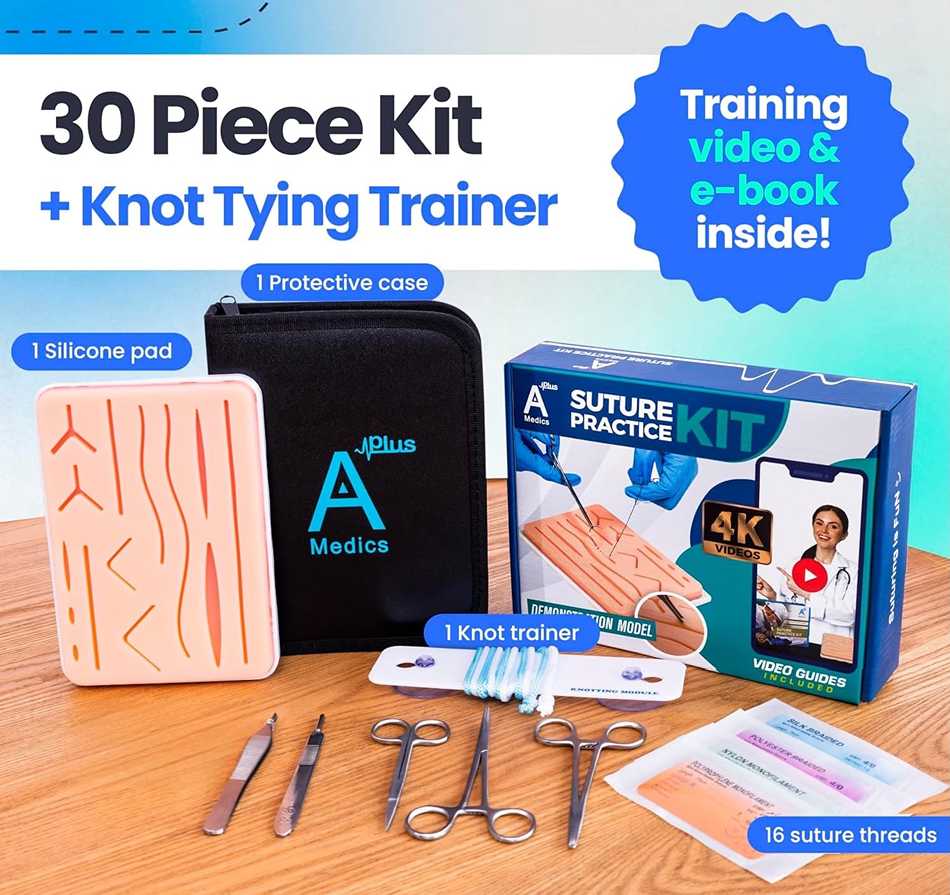
Most medical students don't think seriously about suture training until they're weeks away from their first clinical rotation. By then, whatever habits form under pressure tend to stick. The issue isn't commitment. It's that the wrong equipment builds the wrong muscle memory, and that's genuinely hard to undo once it's been reinforced enough times.
Choosing a quality suture practice kit isn't just about checking a box before rotations start. Students who train with realistic equipment arrive with instinctive technique. Students who don't arrive managing anxiety alongside everything else that's already new about a clinical environment.
Before executing a single suture, you need reliable knot-tying technique — and this is consistently where early training falls apart. Practicing knot coordination directly with fine suture thread is genuinely difficult. The movements are small, visual feedback is limited, and mistakes are easy to miss in real time.
A more effective starting point is a knot tying simulator with two ropes in contrasting colors. Being able to track each strand visually through the throw sequence changes how quickly students internalize the motor pattern. Square knots, surgeon's knots, slip knots, Aberdeen and Roeder knots become automatic through color-guided repetition. The A Plus Medics suture practice kit includes the simulator for exactly this reason: knot competency and suturing competency aren't really separable skills.
The practice pad is what most students underestimate. Pads built with internal horizontal and vertical mesh layers respond to needle penetration differently depending on angle and depth, which forces real tactile adaptation. A flat, forgiving pad teaches a student to complete the motion, not to read the tissue.
Instruments matter for the same reason. A complete suture practice kit should include a needle driver, Adson forceps, dressing forceps, iris scissors, and curved mosquito forceps. These are the instruments students will encounter under supervision.
Students who train deliberately with proper equipment perform measurably better in supervised settings and recover from errors faster. The suture practice kit you choose now either builds that foundation or works against it.
Comments (0)