The Future of College Admissions: Trends Shaping 2026 and Beyond
4 months ago 199

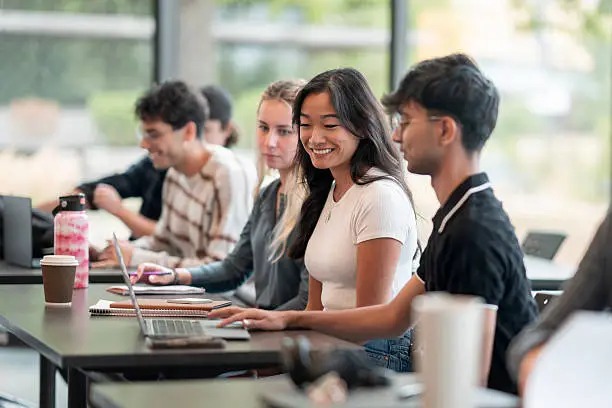
Like many other fields and processes, college admissions is heavily influenced by modern technology. AI and ML, in particular, are making officers' lives easier by shortening the time needed to sift through candidates. Furthermore, officers are putting much more emphasis on social media history and equity.
These trends are also affecting other, related processes. High school students must be very careful about everything they do in their private lives, as it can significantly impact their chances of getting accepted. Furthermore, college admissions consulting has also changed, adapting to new technology and procedures.
In this article, we’ll talk about the most impactful trends that await us in 2026 and how they will affect US college admissions going forward.
Many people in academia fear that AI will completely change the learning and testing processes. The way students do homework and complete exams can become a major issue. On the other hand, artificial intelligence will provide numerous benefits to admissions officers.
Most notably, we will use predictive modeling to forecast students’ college performance based on their high school results and behavioral patterns. Advanced technology might also assist admissions officers in determining whether students used AI tech for essay writing. Overall, this technology should reduce personal biases, increase equity for minority groups, and ensure the best students get a chance.
The biggest critique of standardized testing was that it favored students with privileged backgrounds. So, over time, the US colleges slowly introduced test-blind and test-optional policies. By implementing this methodology, we leveled the playing field, making expensive tutors less of a factor.
Test-optional procedures assessed high school students based on their extracurricular activities, which demonstrated ambition, leadership, and other traits. There’s a greater emphasis on essays, as they showcase the difficulties a person has faced in their life. Basically, admissions officers are now focusing on resilience as something that would indicate future success.
Whether we like it or not, social media has become an integral part of our lives. Younger generations are particularly active on social media platforms like Instagram, YouTube, and Twitter, sharing their daily activities and opinions. As such, these networks serve as a valuable source of information for admissions officers.
Most importantly, officers can browse social media looking for red flags about potential candidates. They can also use Facebook and Instagram to learn about candidates' daily activities and whether they have a positive impact on the community.
US colleges remain the best higher education organizations in the world. They attract hundreds of thousands of applicants from all over the globe, many of whom excel in certain fields. Furthermore, the introduction of foreign students into the US education system has become even more noticeable with the rise of virtual learning.
It has never been easier to apply and get into one of these schools. Foreign students can use AI chatbots to get answers to their questions, without having to wait for college staff to respond. Furthermore, they can attend virtual tours and webinars to learn more about the institution they’re interested in.
As mentioned, test-blind policies have made a major change in how schools evaluate students. Additionally, US colleges are implementing other methods to reduce inequities in their admissions processes. The primary goal is to prevent systemic issues that may be hindering certain groups and individuals from accessing the education they deserve.
Among other things, schools now place a much greater emphasis on socioeconomic background, giving an advantage to students from impoverished countries, regions, and neighborhoods. They also put much more emphasis on the adversities candidates had to go through in high school and before that.
For the longest time, schools evaluated candidates' education level. They would focus on students’ ability to navigate different curricula and acquire new knowledge. However, as the world around us changes, having the ability to learn various theories is no longer as important. Instead, students are challenged to think for themselves and adapt to different situations.
This is why there’s much more emphasis on skills and competencies. Colleges are seeking individuals who have completed various boot camps and online courses. Students who have done various projects in related fields, as well as those who have gone to competitions, usually have a competitive advantage over their peers.
Instead of following traditional calendars, colleges are slowly switching to fluid applications. The traditional semester starting dates are a thing of the past, as colleges strive to enroll as many international students as possible. On top of that, continuous admissions are fantastic for people who are slow at making decisions.
Another great benefit of rolling start dates is the fact that you can quickly replace students who have abandoned their studies. It makes the mid-year transfer much easier, while also enabling accelerated studying. While the method has its challenges, particularly in terms of academic scheduling, it offers numerous benefits for all parties involved.
The mental health crisis in the US has had a major impact on colleges. Many students start dropping out of their respective programs because they’re simply unable to cope with the stress. As a result, there has been a continuous discussion surrounding mental health, an often-overlooked aspect of the college application process.
Perhaps the biggest change is how schools approach essays. Nowadays, admissions officers will openly ask applicants about their mental health support systems and coping strategies. While schools aim to support their students mentally, they’re cautious about accepting candidates who are not fully mentally prepared for the challenge.
Although most of these innovations come with their fair share of challenges, they’ve made the college application process and campus life much better. We’re now employing advanced technology to give the best candidates a chance, ensuring that only the brightest minds get a shot at premium education.
Comments (0)