Reducing Risk Through Automated Data Health Checks
4 months ago 223

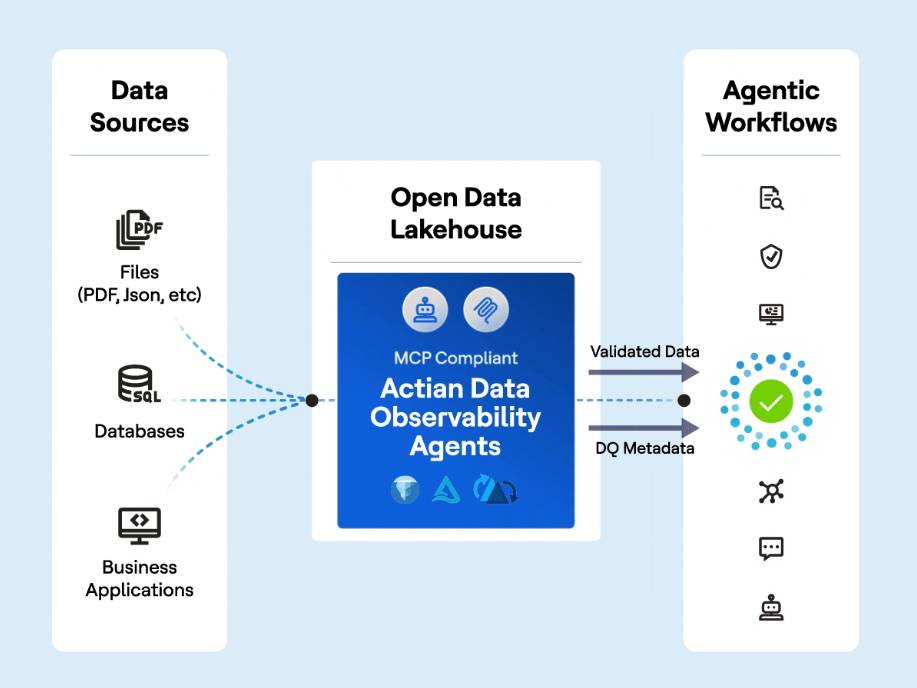
Every organization that depends on data faces an evolving set of hazards: corrupted records, delayed pipelines, schema drift, and silent failures that undermine decision-making. Manual audits and ad hoc fixes are no longer sufficient to keep pace with the volume and complexity of modern data flows. Automated data health checks provide a consistent, repeatable mechanism to identify anomalies early, enforce quality standards, and reduce both operational and reputational risk. When designed and implemented carefully, they transform data management from reactive firefighting into proactive assurance.
Bad data creates cascading costs across an enterprise. Analysts waste hours cleaning datasets, machine learning models degrade when trained on biased or incomplete inputs, and executives make flawed strategic choices based on inaccurate reports. Beyond direct financial consequences, there are regulatory and compliance risks when records are inconsistent or traceability is inadequate. Automated health checks address these issues by surfacing inconsistencies before they propagate. Instead of discovering problems only after a report has been published or a model has failed in production, teams can be alerted at the moment a threshold is breached, preserving trust in analytics and avoiding costly rework.
At their core, automated health checks run tests across data pipelines and datasets on a scheduled or event-driven basis. These tests validate completeness, freshness, cardinality, value ranges, referential integrity, and adherence to agreed schemas. They can detect anomalies such as unexpected null spikes, sudden drops in row counts, or values that fall outside historical norms. Modern implementations also integrate statistical and machine learning techniques that learn normal behavior and flag deviations that simple rules might miss. This capability is often described as data observability, a discipline that combines monitoring, lineage, and automated detection to give teams clear visibility into the state of their data ecosystem.
An alert is only as useful as the context it provides. Effective automated health checks include metadata and lineage information so engineers can quickly understand where problematic data originated, which downstream consumers are affected, and how long the issue has persisted. Notifications should prioritize actionable recommendations rather than merely reporting symptoms: include failing query snippets, recent commits that might explain schema changes, or timestamps that show when latency spikes occurred. Embedding this diagnostic context reduces mean time to resolution and prevents noise from overwhelming teams. By shifting attention to high-impact incidents and providing immediate next steps, health checks enable efficient remediation workflows and help maintain the integrity of production analytics.
Scalability demands a thoughtful balance between coverage and cost. Too many trivial checks create alert fatigue and strain infrastructure, while too few leave gaps in detection. Start by inventorying critical data assets and mapping dependencies so checks are prioritized by business impact. Use adaptive testing that increases scrutiny for high-risk tables, sensitive data fields, and systems with frequent schema evolution. Incorporate sampling and incremental checks to limit resource consumption, and leverage historical baselines to avoid constant reconfiguration as the environment changes. Automated checks should be modular and reusable so they can be applied across pipelines with minimal manual effort, and they should be version-controlled alongside code to ensure traceability and reproducibility.
Technology alone cannot eliminate data risk. Teams must cultivate a culture that values data hygiene and treats health checks as part of delivery rather than optional overhead. Encourage data producers to own the quality of their outputs by providing clear SLAs and integrating checks into CI/CD pipelines. Establish escalation paths so that alerts reach the right stakeholders, whether that is a data engineer responsible for the pipeline or a product owner who needs to assess business impact. Training and documentation help democratize remediation knowledge, enabling junior engineers to act confidently when incidents occur. When health checks are embedded into operational norms, they become a shared safety net rather than a tool wielded by a single team.
To justify investment in automation, measure outcomes that matter. Track reductions in incident frequency, time to detection, and time to repair. Quantify productivity gains by measuring how much analyst time is reclaimed from cleaning tasks, and link improvements in model accuracy or report reliability back to the presence of consistent health checks. Also consider softer metrics such as improved stakeholder trust and reduced compliance risk. These indicators help to refine the scope of checks, prioritize additional automation, and secure continued executive support. A focused feedback loop that translates operational metrics into business value ensures that automated checks evolve with the organization’s needs.
Automated data health checks are not a one-time project but an ongoing capability that matures with the data platform. Start with high-value datasets and build a foundation of reliable tests, detection logic, and contextual alerts. Integrate remediation playbooks and make ownership explicit so that caught issues lead to lasting fixes rather than temporary patches. As systems grow, augment rule-based checks with adaptive models to catch subtler patterns of degradation. By embedding these practices across engineering, analytics, and product teams, organizations can dramatically reduce the likelihood of data-driven failures, protect their decision processes, and unlock greater confidence in the insights they rely on.
Comments (0)