How Glass Size and Design Influence Experience and Filtration
5 months ago 305


Glass is one of those materials people trust instinctively. It feels clean, stable, and transparent in both the literal and practical sense: you can see what’s happening inside, you can rinse it thoroughly, and you can tell when it’s truly clean. That’s why glass shows up everywhere filtration and flow matter, from countertop water vessels to lab glassware to beverage aeration tools. Even when two items look similar at a glance, small changes in size and internal design can noticeably change how a liquid or gas moves, how efficiently particles are removed, and how “smooth” the overall experience feels.
If you’re trying to understand why one glass piece seems to filter better, pour more consistently, or feel less turbulent than another, the answer is usually not a single feature. It’s the interaction between volume, pathway geometry, and how the design manages air exchange as fluid moves.
People often treat “size” as a simple capacity upgrade: bigger holds more. In filtration contexts, size also changes how long fluid spends inside the vessel and how much mixing happens along the way. When a container is larger, it can reduce the intensity of turbulence at a given flow rate because the same movement is spread across a bigger volume. That can make a flow feel steadier, reduce splashing, and create a more predictable pour.
But bigger isn’t automatically “better.” Increasing volume without changing the internal pathway can also create dead zones where fluid stagnates. In a filtration vessel, that may lead to uneven filtering, where some of the liquid passes quickly through the core stream while other areas barely circulate. Good large-format glass design usually includes some mechanism to guide flow so volume becomes an advantage rather than a source of inefficiency.
This is why larger glass pieces are often engineered with more deliberate chamber transitions. A wider lower chamber, a narrower neck, or a shaped internal channel can keep flow moving in the intended direction, improving consistency even when the overall capacity increases.
Filtration is often discussed as if it’s purely about contact with a medium: a filter insert, a perforated screen, a diffuser, or a bed of granules. In real-world use, airflow matters just as much, because it determines pressure balance. If air can’t enter or exit smoothly, you get glugging, uneven flow, and sudden surges. Everyone has experienced the difference between a bottle that pours cleanly and one that “catches” and splashes, even when the liquid is the same.
In glass filtration and decanting systems, the geometry around the opening, its diameter, taper, and presence of vents, changes how quickly pressure can equalize. A narrow opening can slow pour rate and stabilize movement, but if it’s too restrictive it can cause pulsing. A wider opening allows faster exchange, which can make flow feel effortless, but may increase turbulence unless the interior pathway is designed to calm it. The same rule applies to smoking devices such as 20 inch bongs.
This is the same reason vented lids and dual-channel spouts exist in many filtration pitchers and carafes. They’re not aesthetic details. They’re pressure-management features that keep liquid flow continuous instead of stop-and-start.
Two vessels can have the same capacity and still behave very differently because of how the pathway is shaped. Filtration performance is closely tied to whether fluid passes through the filtering zone evenly, at a controlled speed, and with sufficient contact time. If the pathway is too direct, fluid can “shortcut” the filtration medium. If it’s too complex without adequate airflow, resistance can become high and users compensate with more force or faster pouring, which can reduce effectiveness.
Designers use a few common strategies to improve pathway behavior in glass:
A gradual transition between chambers can reduce shear and turbulence. Sharp corners can create eddies and irregular mixing. A slightly tapered connection often produces a cleaner, more predictable stream.
Diffusion features, like perforated plates, internal ridges, or multi-hole glass elements, can spread flow across a wider area, preventing channeling where fluid creates one preferred path. In water filtration, this can help ensure the filter medium is used evenly instead of being bypassed.
Multiple chambers can improve separation by staging the process. In systems that rely on settling or foam reduction, a first chamber can absorb turbulence while a second chamber receives calmer flow, producing a clearer result.
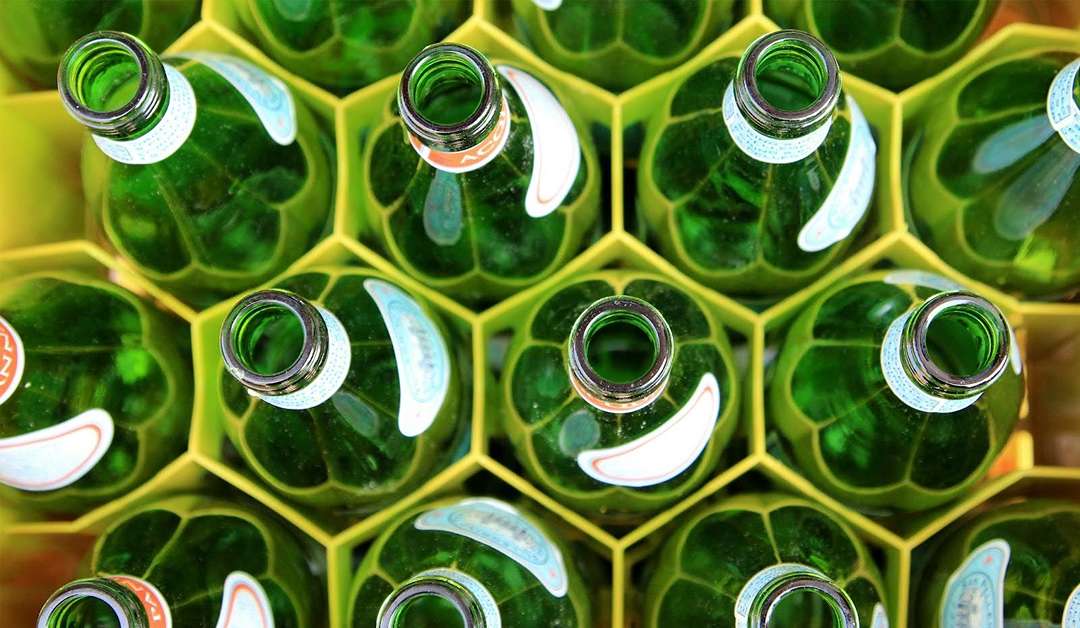
When people describe filtration as feeling “smoother,” they’re often noticing how a design reduces harsh turbulence and micro-splashing. In glass systems, one of the biggest drivers of that sensation is the relationship between surface area and flow rate. A wider body increases surface area, which can reduce liquid velocity for a given volume moving through. That can make motion feel less aggressive and reduce frothing or aeration, depending on the use case.
In beverage contexts, that same principle can be tuned in the opposite direction. If you want aeration, you might choose a design that increases contact with air or intentionally creates controlled turbulence. If you want calm transfer, you choose a design that dampens movement.
This is a useful way to evaluate glass design: ask whether the goal is to energize flow (mixing, aeration) or calm flow (clarity, smooth transfer). Great designs make that intention obvious in how they guide liquid and air.
People focus on size and forget material thickness, but thickness affects both durability and temperature behavior. Thicker glass can retain temperature longer and resist minor impacts better, but it can also create heavier pieces that are less comfortable for frequent handling. Thinner glass can be elegant and easy to use, but may be more sensitive to thermal shock depending on the glass type.
For filtration or repeated rinsing, stability matters. A wider base improves safety and reduces the risk of tipping, especially when the vessel is tall or top-heavy. Handles and grip points aren’t just ergonomic; they influence how consistently a user pours, which indirectly affects how well filtration systems work.
When you scale up to larger formats, structural stability becomes part of performance. A large vessel that’s awkward to lift encourages rushed movement and inconsistent pouring. A well-designed large vessel balances weight distribution so the user can keep a steady angle and flow rate.
A filtration vessel that is difficult to clean is, over time, a worse filter. Residue buildup changes flow characteristics, alters taste in beverage contexts, and can reduce the transparency that makes glass desirable in the first place. Good glass design considers brush access, opening width, and the absence of overly tight corners where residue accumulates.
This is one reason modular systems have become popular. If a component can be removed and cleaned separately, it stays closer to its intended performance. Sealed internal features might look sleek, but if they trap residue, they become liabilities.
When evaluating a design, it helps to imagine how you will clean it one month after daily use, not how it looks brand new. Accessible chambers and simple, continuous internal surfaces usually age better than complex shapes that are difficult to reach.
There’s no universal “best” size. A smaller piece can be more precise, easier to clean, and more consistent for quick tasks. A larger piece can provide more stable flow and better staging for multi-step filtration, as long as the pathway is designed to avoid stagnation. The key is to match design to the type of filtration or transfer you’re doing.
If your goal is steady, calm flow, look for designs that prioritize pressure equalization and smooth transitions. If your goal is more mixing or aeration, look for designs that increase controlled turbulence and air contact. If clarity is the priority, look for staging, multiple chambers, diffusion elements, or pathways that reduce channeling.
In larger formats, details that seem small, opening shape, chamber taper, venting, internal diffusion, become more important, not less. Scaling up amplifies both strengths and weaknesses in a design.
At its best, glass design makes filtration intuitive. You don’t have to fight the pour, guess the flow, or wonder whether the medium is being used evenly. The experience feels predictable because the underlying physics is being managed: pressure stays balanced, flow stays guided, and turbulence stays either controlled or minimized depending on the purpose.
Once you start looking at size and shape through that lens, glass pieces stop being “big” or “small” and start being functional tools. The most effective ones are the ones where capacity, airflow, and pathway geometry work together to produce the specific filtration outcome you actually want.
Comments (0)