Why I Finally Ditched My 5-Tool Workflow for One Creative Superstation
7 months ago 433

You know the feeling. It starts with a spark—a brilliant concept for a brand video or a visual story that could stop the scroll. You can see it perfectly in your mind’s eye: the lighting, the motion, the texture.
But then, reality hits.
To bring that vision to life, you have to open five different tabs. You need one tool for the base image, another to animate it, a third to upscale the resolution, and maybe a fourth to handle the specific cinematic style you want. You are bouncing between subscriptions, managing multiple logins, and watching your monthly overhead skyrocket. It’s not just expensive; it’s exhausting. The creative flow isn’t flowing—it’s stuttering.
I’ve been there. Just last month, I spent three hours trying to synchronize a character consistency workflow between two different AI platforms. By the time I got the technical details right, the raw excitement of the idea had evaporated.
This is the "Fragmented Creator" problem. And until recently, I thought it was just the price we had to pay for cutting-edge tech.
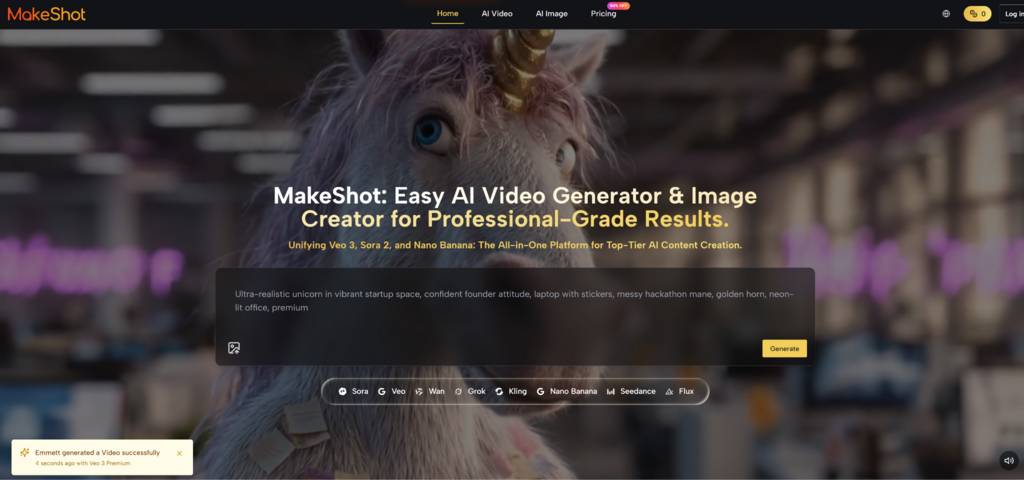
Then I stumbled upon MakeShot. It didn’t just streamline my process; it completely rewired how I approach digital storytelling.
In the world of AI, we are often sold "all-in-one" tools that turn out to be mediocre at everything. They are like those cheap multi-tools where the scissors don't cut and the screwdriver bends.
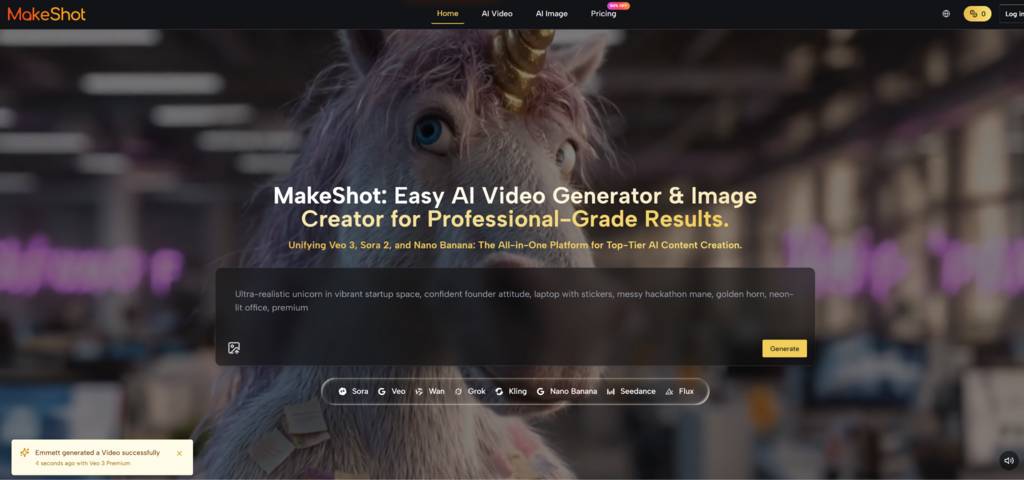
However, my experience with MakeShot felt different. It wasn't trying to imitate the best models; it was aggregating them.
Imagine you are a chef. Instead of having to run to the butcher for meat, the farmer for vegetables, and the importer for spices, imagine a kitchen where the world's best suppliers deliver directly to your counter. That is the architecture behind MakeShot.
I decided to test the platform with a complex prompt: “A cyberpunk street food vendor in a neon-rainy Tokyo, cinematic lighting, 8k resolution, transitioning from a wide shot to a macro focus on the steam rising from the food.”
On other platforms, this is a nightmare. You usually get the lighting right but the motion is warped, or the motion is smooth but the resolution is blurry.
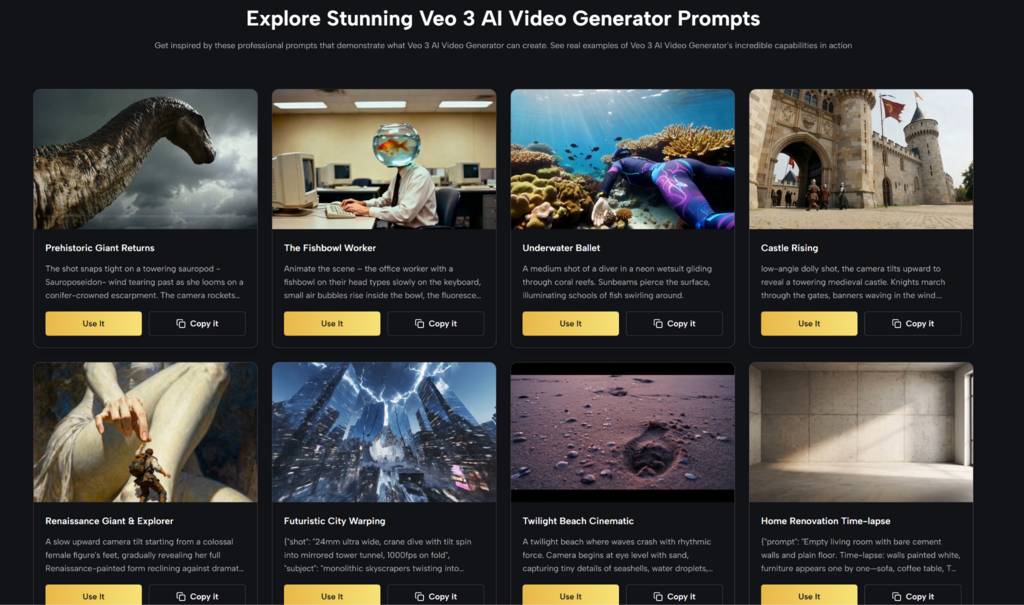
I plugged this into MakeShot. The interface didn't ask me to choose between "good quality" or "good motion." It simply leveraged its backend power—integrating top-tier engines like Veo 3, Sora 2, and Nano Banana—to synthesize the result.
The result wasn't just a video; it was a film. The steam didn't just fade; it swirled with physics-based realism. The neon lights reflected accurately in the puddles. It felt like I had just hired a VFX team, but all I did was type a sentence.
Most users don't care about the code; they care about the output. But to understand why MakeShot feels different, you have to look at the engine.
The workflow is deceptively simple. You aren't fighting the UI.
It’s like having a conductor who knows exactly which instrument needs to play louder at any given moment.
Let’s look at a direct comparison. I took a standard project—a 15-second product commercial—and ran it through my old workflow versus the MakeShot workflow.
To make this crystal clear, I’ve broken down the technical and practical differences between sticking with single-model tools and moving to an aggregated studio like MakeShot.
| Feature | Standard Single-Model AI | MakeShot Studio | The Creator Benefit |
| Model Access | Limited to one proprietary model (e.g., only MJ or only RW). | Aggregated Power (Veo 3, Sora 2, etc.) | You never miss out on the latest tech; it's all in one place. |
| Consistency | High failure rate; characters change faces between shots. | Narrative Coherence | Tell a continuous story without your protagonist morphing into a stranger. |
| Learning Curve | Steep; need to learn different prompt engineering for every tool. | Unified Logic | Learn one interface, master all models. |
| Cost Efficiency | High ($100+/mo for a full stack). | Optimized | One bill, unlimited creative potential. |
| Commercial Rights | Often murky or requires "Enterprise" tiers. | Pro-First Design | Built for creators who need to sell their work. |
In the current digital landscape, the algorithm doesn't wait for you to perfect your workflow. If you are spending days on a task that should take minutes, you are already behind.
MakeShot isn't just a tool; it's a time machine. It buys you back the hours you used to spend troubleshooting, allowing you to reinvest that time into creativity.
Previously, that "cinematic look"—the bokeh, the perfect color grading, the smooth camera pans—was gated behind expensive equipment and years of film school.
Now, it is accessible to you. Whether you are running a dropshipping brand, a personal vlog, or a marketing agency, the barrier to entry has been smashed. You can produce Super Bowl-quality visuals from your laptop.
We are moving away from the era of "fragmented AI" where we needed a folder full of bookmarks to get a job done. The future belongs to integrated studios that understand the creator's need for flow, speed, and quality.
My experience with MakeShot reminded me why I fell in love with creating in the first place. It removed the friction. It stopped me from feeling like a technician trying to fix a machine, and let me go back to being an artist painting on a canvas.
If you are tired of the subscription fatigue and the disjointed workflows, it might be time to consolidate your power.
Don't just watch the revolution. Direct it.
Stop juggling tools and start creating masterpieces. The studio is open, and the lights are on.
Comments (0)