Decision-Making Under Pressure: Insights from Poker and Medicine
9 months ago 4729

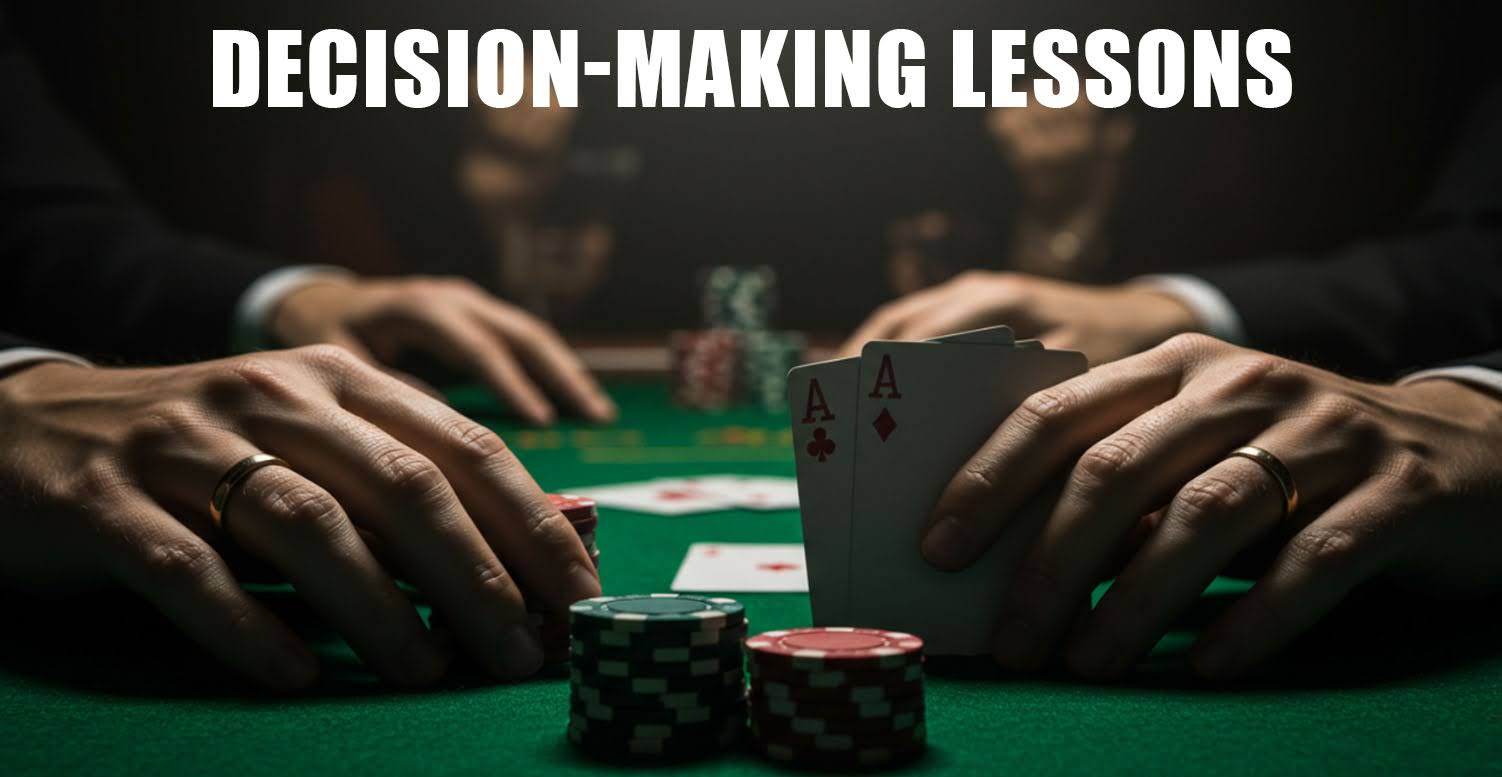
Future doctors regularly face situations where they need to make quick decisions. A mistake can cost a patient their health or life, so it is extremely important to keep a clear head in stressful situations. Up to 15% of misdiagnoses are not due to a lack of knowledge, but to decision-making under pressure.
Interestingly, similar skills can be honed at the poker table. Poker strategies teach you to calculate probabilities, manage risks, and control your emotions when the stakes are high. This is valuable experience for medical students—the same principles help them stay focused and make accurate decisions in complex clinical scenarios.
When a person is under psychological pressure, it negatively affects their cognitive abilities. Doctors and poker players face the same problems: time constraints, incomplete information, and the high cost of mistakes:
Yes, stress at the poker table and in medical practice is inevitable. But the habit of thinking clearly gives you control over the situation and increases your chances of making the right decisions.
Poker develops the habit of assessing a situation from different angles. A player cannot rely solely on cards. They have to take into account probabilities, resources, and the behavior of their opponents. Similar skills are useful in medicine when decisions are made in conditions of uncertainty:
Game strategies prove that critical thinking can be developed not only in the classroom or hospital. Skills honed at the table help you keep your cool and make informed decisions during diagnostic reasoning.
Simulation training is increasingly appearing in training programs for future doctors. Their goal is to instill clinical decision skills in students in conditions of uncertainty and stress. Beginners in poker face the same challenges, as they are taught to determine the outcome based on the analysis of limited information and the choice of the optimal action:
Poker is a simulator for developing analytical and concentration skills. These qualities enhance clinical decision skills, which are critical in medical practice.
Medical students who play poker often find unexpected parallels between the game and their practice. Their stories demonstrate how skills from one area help in another:
There are also stories about confidence in uncertain situations. Those who are used to making decisions without complete information in poker were better at handling urgent clinical tasks. Of course, observation is no substitute for training, but it proves that the experience gained at the gaming table is useful in medical practice.
Simulations allow us to determine the stress resistance of medical professionals in difficult conditions. Students find themselves in situations with no ready-made solutions, in which they must act quickly, relying on facts and logic. The rigorous training format increases resistance to psychological pressure, which has a positive effect on decision-making:
Gradually, the classes influence the style of work: instead of impulsive decisions, the habit of staying calm and seeing several options for getting out of a situation appears.
Poker teaches you to calculate probabilities, manage risks, and make decisions when you don't have enough information. These skills are useful for future doctors who have to work in similar conditions—when time is short and the cost of mistakes is high.
Using poker strategies forms the habit of thinking systematically and staying calm under pressure. Over time, this becomes mental training and the basis for professional growth. Doctors make more confident diagnoses, choose more accurate treatment methods, and work more effectively in a team.
Comments (0)