From Raw Data to Health Maps: How AI Transforms Laboratory Results into Predictive Medicine
11 months ago 1099


Modern healthcare is undergoing a profound shift from reactive symptom management toward predictive and preventive approaches. Central to this transition is the ability to extract meaningful signals from the enormous volume of biomedical data that individuals generate throughout their lives. Blood tests, genetic panels, metabolomics, and wearable sensors all provide streams of information. Yet without advanced computational methods, these datasets remain fragmented and underutilized.
Artificial intelligence and machine learning now offer the possibility to unify such information into coherent “health maps,” giving clinicians and patients a dynamic view of risk and resilience. Instead of interpreting a laboratory value in isolation, AI systems can integrate multiple biomarkers, detect hidden patterns, and forecast trajectories. This approach changes the function of laboratory diagnostics from static measurement to predictive modeling [1].
For decades, laboratory tests have been reported relative to reference ranges, typically defined by population averages. A value outside the range is considered abnormal, while one within it is assumed to be normal. This binary interpretation discards a great deal of information.
As Dmitry Chebanov notes, AI-based methods can identify subtle deviations inside the so-called normal range that might nevertheless predict disease risk. For example, small shifts in inflammatory markers, lipid subfractions, or methylation status may accumulate into a detectable pattern long before a patient develops symptoms. By moving beyond threshold-based logic, machine learning can capture gradients of risk that are invisible to conventional interpretation.
A single laboratory test rarely reflects the complexity of health and disease. Genomics, transcriptomics, proteomics, and metabolomics each describe a different layer of the biological system. The challenge is integration. Human experts cannot easily reconcile hundreds or thousands of parameters simultaneously.
Deep learning architectures, originally developed for natural language and image recognition, are increasingly applied to biomedical data integration. Models can align heterogeneous datasets into common latent spaces, where molecular features, clinical history, and lifestyle factors interact. This creates the possibility of inferring mechanistic links between, for instance, a genetic predisposition and an observed metabolic imbalance.
Such integrative models can also address a persistent limitation in real-world datasets: missing values. By learning from correlations across multiple omic layers, AI can impute absent markers with a degree of accuracy that makes downstream predictions far more reliable. This enables broader application of multi-omic profiling without requiring every possible assay to be performed [2, 3].
Health is not static. A blood test is a snapshot, but biology unfolds over time. Traditional medicine often reacts only when a parameter crosses a pathological threshold. Predictive approaches instead focus on the slope and direction of change.
Time-series models allow AI to learn from sequential measurements, capturing the rate at which metabolic, immune, or hormonal parameters evolve. A gradual decline in mitochondrial markers, for example, may signal the onset of age-related disease years before overt dysfunction appears. Detecting these trajectories enables earlier and more personalized interventions.
Wearable sensors add another temporal dimension by continuously tracking physiological variables such as heart rate variability, sleep architecture, and activity. When combined with laboratory data, they provide a longitudinal context that sharpens prediction and distinguishes transient fluctuations from persistent risk factors.
The true value of AI-driven analysis lies in translation into actionable decisions. Predictive outputs must be presented in formats that clinicians and patients can understand and trust. A health map is not simply a report of abnormal values but a visualization of systemic interactions. It highlights which biological pathways are under strain and estimates the probability of future disease events [4].
Decision support systems can rank possible interventions by predicted efficacy, whether pharmacological, nutritional, or lifestyle-based. For instance, if a model identifies impaired lipid metabolism as a central driver of risk in a given individual, it can prioritize dietary modification or specific supplements over less relevant actions. Importantly, such recommendations are probabilistic, not deterministic, and require careful human oversight.
Despite rapid progress, several challenges remain before predictive diagnostics become standard practice.
The vision of predictive medicine is not to replace physicians but to equip them with tools that reveal layers of biology too complex for unaided human reasoning. By turning raw laboratory data into structured health maps, AI enables earlier detection, more precise interventions, and more efficient allocation of healthcare resources.
Organizations that bridge computational expertise with clinical insight will define this emerging field. The next decade will likely see convergence between medtech companies, academic research centers, and healthcare providers around predictive platforms that combine multi-omic data, wearable monitoring, and machine learning.
As this transformation unfolds, the role of the patient will also evolve. Instead of being a passive recipient of care, each individual becomes an active participant whose data contribute to personalized risk models. Empowering patients with interpretable health maps fosters engagement, adherence, and ultimately better outcomes (Fig.1).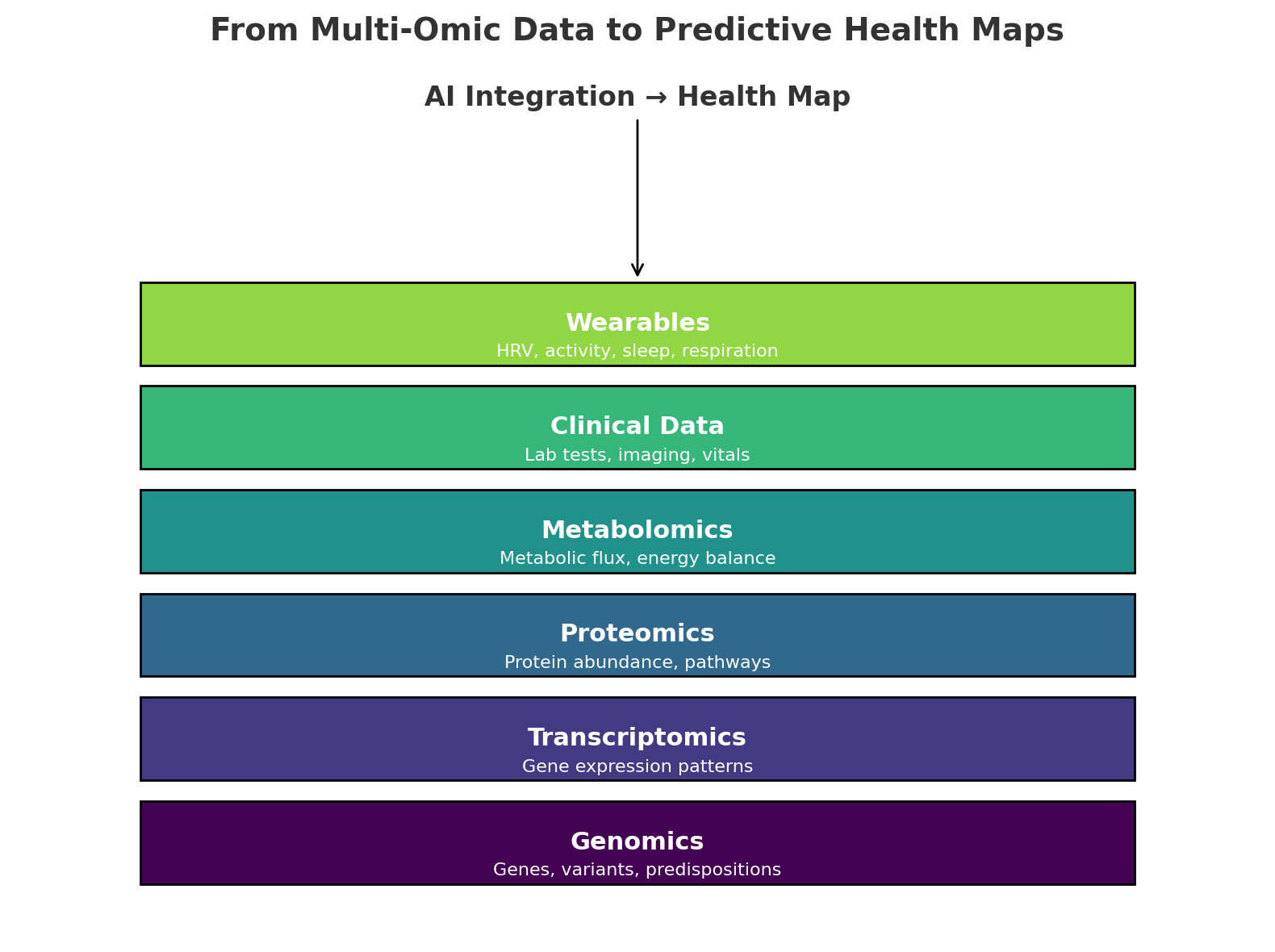
Fig.1. Data layers integrated into predictive health map
The transition from reactive to predictive medicine depends on harnessing the full informational value of biomedical data. Artificial intelligence is not merely a new analytical tool; it is the mechanism by which fragmented laboratory results become integrated, dynamic representations of health. While challenges of standardization, bias, and regulation remain, the direction is clear. Medicine is moving toward a future where prevention is guided not by averages but by individualized health maps generated from data.
This is the frontier where medtech innovation will have its greatest impact: transforming laboratory diagnostics into predictive systems that guide proactive healthcare.
Comments (0)