7 Life-Changing Benefits of LASIK Eye Surgery You’ll Wish You Knew Earlier
1 year ago 759

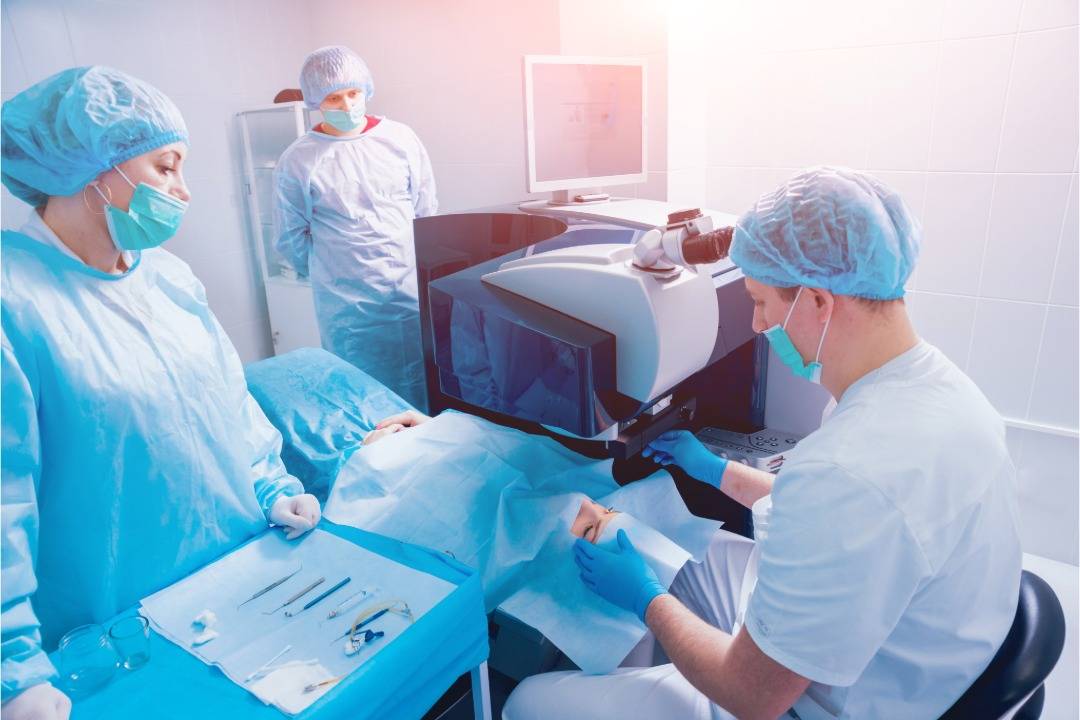
If foggy glasses and lost contacts keep slowing you down, LASIK gives you clear vision without the daily hassle. With rapid advances in eye care hospital technologies - from Contoura Vision surgery to Custom Eyes surgery - we’ve come a long way. But LASIK remains one of the most popular and trusted solutions for vision correction.
Years ago, it meant a longer, more painful recovery and wasn't as accurate. With advancements like wavefront-guided mapping, AI diagnostics, and faster lasers, things are safer, faster, and more precise. Today, LASIK stands out as a very popular eye surgery, chosen by millions around the world.
Want to learn more? Let’s look at the main benefits of LASIK, from better focus to more comfort in daily life.
LASIK does more than just help you see better; it sharpens your sight, too. LASIK uses an excimer laser to reshape your cornea and fix issues like nearsightedness, farsightedness, and astigmatism. The excimer laser emits an ultraviolet beam, removing microscopic amounts of corneal tissue without generating heat damage.
A femtosecond laser is used to create a flap in the cornea, which is then lifted so that the excimer laser can reshape the underlying tissue. This bladeless approach is quite ideal to ensure micron-level accuracy and reduce the risk of mechanical complications. Afterwards, the flap is gently placed back - no sutures needed. This surgery assures convenience- no stitches, no bandages.
Some eye care hospitals now even use Contoura Vision surgery, an advanced form of laser eye surgery, which maps 22,000 unique points on your cornea to personalise the treatment. This topography-guided method corrects both the refractive error and subtle surface irregularities, leading to sharper night vision and reduced glare.
| Aspect | Details |
| Primary Laser Used | Excimer laser (cool ultraviolet) to reshape the cornea |
| Supportive Laser | Femtosecond laser to create corneal flap (bladeless, high-precision) |
| Surgical Approach | Flap-based procedure without stitches or bandages |
| Mapping | Maps 22,000 corneal points for personalised correction |
| Conditions Treated | Myopia, hyperopia, and astigmatism |
| Technology Highlight | Individualised mapping for more accurate, tailored outcomes |
For many people, the first thing they notice after LASIK isn’t a dramatic “before and after” - it’s the small shift. Street signs look a little sharper. Phone text feels easier to read. By the next morning, vision has usually stabilised enough that most patients can move around confidently.
The design of the corneal flap leaves much of the outer surface untouched, so the eye avoids the kind of widespread healing response that slows recovery in surface-based surgeries like PRK. Less inflammation means less waiting.
Most patients report significantly improved vision within 24 hours. While healing timelines can vary, visual acuity often reaches 20/20 or better in just a few days. It’s basically like your eyes just upgraded their software.
Think about it - swimming without the blur, hiking without the constant push-up of frames, or stepping off a plane without dry, scratchy eyes from a long-haul contact lens session. It’s the kind of freedom that’s hard to appreciate until you’ve lived without it.
This isn’t just about convenience. People working in precise environments - chefs leaning over steam, athletes training outdoors, surgeons in high-stakes operations - can’t afford the split-second distractions of fogging, slipping, or shifting eyewear. LASIK sidesteps all of that, removing the constant low-level management of glasses or lenses that most of us stop noticing until they’re gone.
LASIK is a quick procedure. Before a patient even gets near the laser, the eyes are scanned in high resolution, the corneal surface is mapped, and a personalised plan is set. Anaesthetic drops numb the surface, so pain isn’t part of the equation.
The entire LASIK procedure typically takes around 20-30 minutes for both eyes. Patients are awake during the surgery, numbed by local anaesthetic drops. During the procedure, a tracking system follows eye movement in real time, adjusting the laser beam if there’s even a fraction of a millimetre shift. The patient may feel a mild pressure sensation, but it’s quickly over.
During the procedure, a tracking system follows eye movement in real time, adjusting the laser beam if there’s even a fraction of a millimetre shift. Reputed eye care hospitals have stringent protocols in place - sterile environments, high-precision equipment, experienced surgeons - so you’re in good hands (and even better gloves).
LASIK is not new, and that’s a good thing. It’s been tested, refined, retested, and improved. The lasers used today can fire thousands of pulses per second with a precision margin thinner than a human hair.
Today’s systems use eye-tracking, wavefront-guided mapping, and controlled lasers for better results.
This is why LASIK isn’t lumped in with just cosmetic procedures. It’s an FDA-approved, clinically tested refractive surgery with consistent results. Millions of procedures later, the core safety profile has stayed reassuringly strong.
After cataract eye surgery, for instance, patients often need regular follow-ups, medications, or lens adjustments. LASIK? Not so much, the maintenance list is short. A handful of follow-up visits. A brief course of medicated drops. A few sensible restrictions in the first week - no swimming pools, no dusty work sites, sunglasses in bright light.
There are no implants or recurring procedures. Your cornea heals naturally and stabilises within a few months. Even enhancements, if needed, are minimal and straightforward. The cornea simply heals and stabilises!
Up front, LASIK can look like an expensive procedure. But stretch the calculation over ten years, and it starts looking more like a cost-saving investment. Take someone spending a particular amount a year on contacts, cleaning solutions, and routine check-ups - that adds up over a decade. Add in a few pairs of prescription sunglasses, optician visits, an emergency frame replacement, or lens upgrades, and the total climbs higher.
With LASIK, those ongoing costs vanish. Over 5–10 years, LASIK pays for itself. Plus, many eye care hospitals offer financing plans, EMIs, and insurance-backed procedures. So even if the cost seems eye-watering at first, it isn’t always out of reach.
LASIK isn’t suitable for everyone. People with unusually thin corneas, changing prescriptions, persistent dry eye, or certain corneal disorders face higher surgical risks. For them, skipping the proper evaluation isn’t just unwise - it could jeopardise long-term vision health.
That’s why surgeons rely on a full set of pre - op diagnostics: corneal topography to chart the eye’s curvature, pachymetry to measure tissue thickness, tear film testing to assess moisture levels, and precise pupil size readings to anticipate low-light performance. The results tell the surgeon whether LASIK is the right match or if alternatives such as Contoura Vision, implantable lenses, or simply waiting make more sense.
Vision affects more than how far you can read on an eye chart. It changes how you wake up, how you work, and how you move through the world.
Just remember- it’s always important to choose a reputable eye care hospital. Patients often say they notice the little things first - the sharpness of leaves against the sky, the absence of glare on wet roads at night.
There’s also a shift in confidence. You’re not thinking about whether your glasses are clean or if your contacts will dry out halfway through the day. You just get on with life - driving at night, playing sports, or reading a menu in dim light - and seeing clearly while you do it.
Comments (0)