Strategies and Tools for Crash Gaming
11 months ago 955

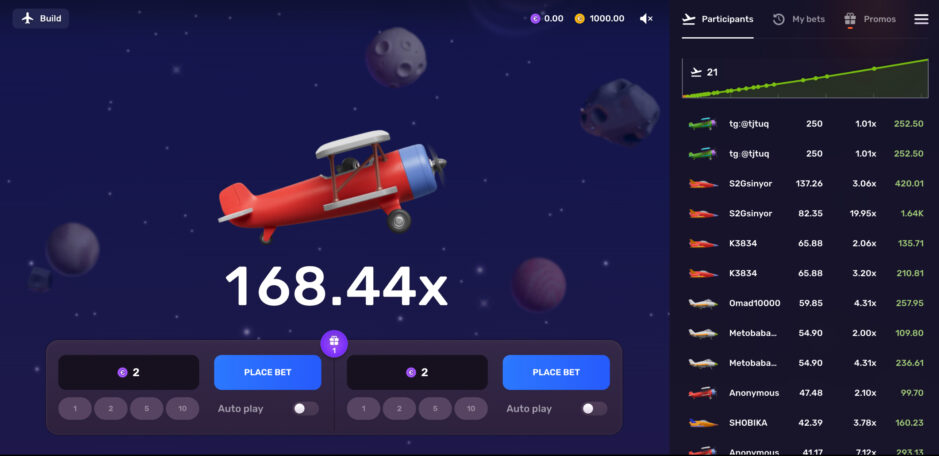
You know what nobody tells you about crash games? They're basically designed to взаимодействовать with your head in the most elegant way possible. Here's the thing — people think they can't get a system, some magical strategy that'll beat the house. But the reality is way more interesting (and honestly, way more useful to understand) than nonsense you'll find in sketchy Discord groups.
Think about it: you're watching that multiplier climb — 1.5x, 2x, 3.5x — and every fiber of your being is screaming two different things simultaneously. Cash out now and take the safe profit, or ride it higher because "this could be the one". That tension? That's not a bug, it's the entire feature.
The most successful game players I've encountered (and I'm talking about people who actually stay in profit permanently, not just lucky weekend warriors) all do this weird thing where they basically ignore their emotions entirely. They set their auto-cashout at something boring like 1.5x or 2x and just... let it run. Over and over. You can say: it's about as exciting as watching paint dry, but here's what's twisted — it actually works.
Imagine the guy, let's call him Marcus, treats crash games like he's running a small business. He's got spreadsheets tracking every single bet, calculates his expected value down to the decimal, and — this is the kicker — he never deviates from his plan. Even when he watches a 50x multiplier sail by after cashing out at 2x. Especially then, actually.
Everyone's always hunting for the perfect predictor tool or some algorithm that'll tell them when to cash out. Here's what really happens: those tools are not all equally useful. The good ones like aviator predictor apk might track patterns and give you valuable data, but treating them like crystal balls is how you end up explaining to your roommate why rent's gonna be late.
What do you actually need? A calculator and the emotional regulation skills of a Buddhist monk. I'm serious. The math part is straightforward — you need to understand expected value, house edge (usually around 3% in crash games), and basic probability. Nothing fancy, just enough to know why chasing a 10x multiplier every round is basically lighting money on fire with extra steps.
But the emotional regulation thing? That's where most people completely fall apart. You need something — an app, a timer, whatever — that physically limits how long you play. Because here's the uncomfortable truth: the longer you sit there, the worse your decisions get. It's not about willpower. Your brain literally gets worse at risk assessment when you're deep in a session.
Oh, and by the way, if someone suggests the Martingale strategy (you know, doubling your bet after every loss), run. Just run. It sounds so logical, right? Eventually you'll win and recover all your losses plus profit. Except here's what happens in reality: you hit a losing streak — and you will — and suddenly you're betting your entire bankroll on a single round just to win back your original $5 bet. I've watched people blow through thousands chasing a ten dollar loss. It's genuinely painful to witness.
The strategies that actually work are boring as hell. Fixed betting (same amount every time), percentage betting (always betting 1-2% of your bankroll), or session limits (stop after X rounds regardless of outcome). These aren't sexy. They won't make you rich overnight. But they also won't have you selling your gaming console to make rent.
Here's what's actually happening in your brain when you play crash: you're getting little dopamine hits every time that multiplier climbs, and massive ones when you successfully cash out at a high number. Your brain starts a pattern-matching like crazy, convinced it's figured out the rhythm. "It went to 5x three times in a row, so this next one will crash early."
Except — and this is crucial — each round is completely independent. The game doesn't "remember" previous results. That 100x multiplier you saw yesterday has exactly zero impact on what happens next. But try telling that to your pattern-seeking monkey brain at 2 AM when you're convinced you've cracked the code.
The people who do well long-term? They've basically learned to treat their own brain like an unreliable narrator. They acknowledge the feelings ("I really think this one's going high") and then completely ignore them. It's like having a drunk friend giving you advice — you listen politely, then do the opposite.
For most people, the setup that works looks something like this: You've got your main screen for the game, obviously. But then you've also got either a spreadsheet or an app tracking every bet. Not because you're going to find patterns (you won't), but because seeing your actual win/loss ratio in black and white is sobering as hell.
You need hard limits coded into your routine somehow. Some people literally set timers. Others use banking apps that lock funds after you've transferred your gambling budget for the week. The specific mechanism doesn't matter — what matters is that it's external to you, because you cannot trust yourself to make good decisions when you're in the zone.
And here's something weird but effective: some successful players actually run two games simultaneously, but with completely different strategies. One aggressive, one conservative. It sounds chaotic, but it actually helps maintain perspective. When your conservative game is slowly grinding profit while your aggressive one is swinging wildly, it becomes really obvious which approach actually works.
You want to know the really twisted part? The absolute best game players, the ones who've been doing this for years and actually make consistent profit? Most of them barely play anymore. They've automated everything they can, removed all emotion from the process, and turned it into something that resembles work more than gambling.
Because that's what sustainable gaming actually looks like. It's not the highlight reel of massive multipliers and perfect timing. It's spreadsheets, predetermined strategies, and the discipline to walk away when you're up 10% for the day instead of chasing the high of a bigger win.
The tools and strategies that work aren't complicated. Set a budget, use auto-cashout, track everything, ignore your emotions, and stop before you think you need to. The hard part isn't knowing what to do — it's actually doing it when every instinct is screaming at you to let it ride just one more time.
Honestly, if you take anything from this, let it be this: the house edge is real, the math doesn't lie, and the only way to consistently win at games is to be boring as hell about it. Everything else — the prediction tools, the strategies, the systems — they're just different flavors of the same fundamental truth. The game is designed to be exciting. Your job, if you want to come out ahead, is to make it as unexciting as possible.
Comments (0)