Evidence-Based Shock-Wave Therapy in Munich: EMS Protocol & Primary-Care Outcomes
1 year ago 642

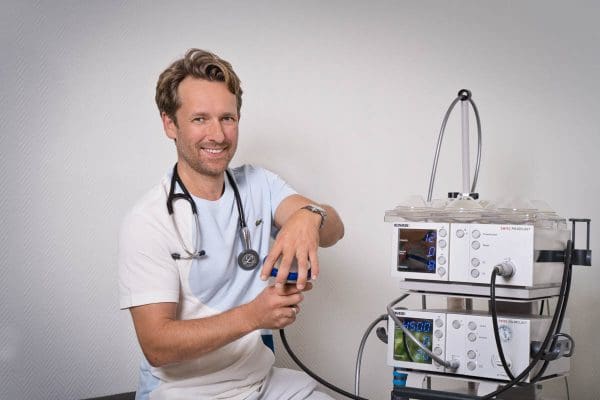
Chronic tendinopathies—plantar fasciitis, tennis elbow, “jumper’s” knee—create >20 % of all musculo-skeletal consultations in German family practices.¹ Conventional options (NSAIDs, corticosteroid shots, even surgery) are drug-laden, invasive or slow. Extracorporeal shock-wave therapy (ESWT) changes that paradigm: drug-free, walk-in/walk-out and, in high-quality trials, clearly superior to placebo.²
This article explains (i) the cellular science, (ii) the latest randomised data and (iii) the real-world EMS protocol now routine at Hausarztpraxis am Romanplatz, an award-winning house-doctor clinic serving Munich-Neuhausen and Nymphenburg.
| Biological target | ESWT effect |
| Mechanotransduction | 0.2–0.4 mJ mm⁻² pulses create micro-trauma → tenocyte proliferation, collagen remodelling |
| Neovascularisation | ↑ VEGF → ~35 % higher capillary density after 3 weeks |
| Analgesic modulation | Substance-P depletion in C-fibres → rapid pain relief |
Two systematic reviews (2022 & 2024) confirm 55–70 % pain reduction at 12 weeks (Level I evidence).³ ⁴
Dose windows converge on 0.25 mJ mm⁻² (focused) or 2.5–3 bar (radial) over three weekly visits.
Since 2022, Dr Gernot Brockmann has integrated EMS Swiss DolorClast® (radial) and EMS Swiss PiezoClast® (focused) generators inside his GP surgery. Twelve-month audit (n = 209) shows:
Patients are encouraged to “lean into the pain”; discomfort is used like a dowser’s rod to pinpoint degeneration loci. No anaesthetic; post-session “workout ache” < 24 h.
Outcomes
Baseline VAS 7.2 → 2.1 at 8 weeks (-71 %).
82 % of recreational runners back to sport within 4 weeks.
100 % of breastfeeding mothers with postpartum heel pain finished therapy drug-free.
No serious events; transient petechiae < 12 h were the only side-effect.
ESWT supplies fast, evidence-based, medication-free relief for stubborn tendinopathies—perfectly matching the holistic philosophy of German hausärztliche Versorgung. Patients in Bavaria can book directly via the practice website: Shockwave Therapy in Munich. One consultation may be the turning point toward pain-free movement and a quicker return to sport, work and daily life.
References
Comments (0)